Showing posts with label Playstation 2. Show all posts

Wednesday, June 04, 2008

Flogging A Dead Horse

Sony's unabashed commitment to obsolete and sub-par technology continues. Gamasutra is reporting that Sony Japan are about to launch a new "cinnabar red" PS2, a "metallic blue" PSP, and an EyeToy peripheral for the PS3.

New skins for the PS2 isn't the greatest commitment to the ongoing success of the PS3. And admittedly the PSP is outselling the PS3 by a massive margin, but that thing needs a redesign a lot more than it needs a new SKU.

As for the EyeToy, unless they've improved on the PS2 version a lot, then I really can't see why anyone would possibly want one of these suckers.

Friday, April 25, 2008

New Silent Hill In September

If you're a Silent Hill fan like myself you'll be pleased to know that the upcoming Silent Hill 5 has been given the name Silent Hill: Homecoming and will be released in Australia as early as September on XBox 360 and PS3.

The development company involved is unfortunately a bit horrific; Konami has outsourced the creation to The Collective, the perpetrators of such titles as The Da Vinci Code and Mark Ecko's Getting Up: Contents Under Pressure. In my mind's eye I picture the franchise chained in their basement and only getting fed once a week. Sometimes when it cries they beat it with a stick.

We're also gettting the PlayStation 2 port of the underwhelming Silent Hill Origins in May, which removes one of the few remaining reasons to keep your PSP charged. It's entirely possible if you get Origins and Homecoming together they may add up to being almost a real Silent Hill game.

Tuesday, June 19, 2007

Okami Post-Mortem

Okami is absolutely the best Zelda-clone ever made about a sun-goddess inhabiting the body of a wolf statue and using the magic power of calligraphy to beautify the natural envronment. Hands down.

I mean, there's no question. Even if you're a fan of one of those other goddess-wolf-calligraphy games that we see so many of these days, you're going to be forced to concede that Okami delivers far more than its competitors just in the realm of art style before you start getting into any of its gameplay innovations.

Nothing else looks like Okami. Where other games push for photorealism, Okami decides that the appropriate look for a videogame should be a mix of shadow-puppetry and traditional Japanese woodcuts. And then renders the whole thing in a kind of hallucinogenic cell-shaded 3D. Things don't appear as what they are so much as icons of what they are. People are vague suggestive shapes; scenery is rendered in the manner of flowing brushstrokes; monsters are malformed malevolent scribbles. The hand of the artist is visible in each and every image on screen.

All this artistic eccentricity flows right into the gameplay. You'll play as the sun goddess Amaterasu, who has taken command of a statue of legendarily heroic wolf Shiranui in order to combat an evil darkness spreading across Nippon. Amaterasu can use all of Shiranui's wolfy abilities, including sprinting, hole-digging and the rending of flesh, but more relevantly she also has the power of the Celestial Brush at her command.

By holding down a shoulder button, you can stop time, and turn the scene in front of you into a hand-drawn parchment. Then you can draw on it. For example, executing a straight horizontal-ish line across the scene will deliver a devastating slash which will overcome monsters, topple trees, and cleave stones. Drawing a circle in the air will bring forth the sun and turn day to night; the same circle on a plant will bring it into bloom; and if you add an extra line to the circle reminiscent of a fuse then you'll summon into being a mighty explosive to break down barriers and devastate your opponents.

Okami overcomes the bane of many games that use a drawing system - the symbols you'll be drawing are easy to handle and the game is intelligent in interpreting them. It matters not if your circle is drawn clockwise or anti-clockwise, or whether you start at the top or the bottom; slashes can be made on pretty much any plane except straight vertical and can go left-to-right or right-to-left, et cetera. (The bloom power is occasionally a little frustrating, but you'll rarely have any time pressure when using that one.) The fact that time stops when you're drawing is a huge help.

You don't start with all the brush techniques at once. Instead, you pick them up from various celestial beings as you go about your travels. In this way, the game is very similar to The Legend of Zelda, as you'll be picking up a new ability, using it to overcome a challenge, and then getting a new ability as a reward (rinse, repeat).

Your quest will regularly take you into caves and dungeons, but the developers seem not to have understood that the very best bit about what they've created lies on the overworld. Each new section of overworld you encounter is initially possessed by a creeping darkness that has turned the land into a barren wasteland. As you use your powers to perform various tasks in each section, the wasteland will be driven back until eventually the area is a paradise once more.

Your first task is usally to bring into bloom a sacred tree in each area, which sends a wave of rejuvenation running across the land, making the blight retreat to select pockets of nastiness. This all by itself is an incredibly cool and satisfying cutscene, as flowers and greenery rush across the landscape like an unstoppable tide.

Once you've made the area vaguely safe to traverse, you can then seek out the individual trouble points and use your abilities to fix them. Blighted grass can be healed by colouring it over with your rejuvenation power. Water can be made to flow by linking clean rivers to empty or blackened ones with lines of your brush. Animals can be fed with a variety of foodstuffs. Dead trees can be brought back to life with a touch of your brush. This gameplay is simple but deeply rewarding, as the results of your actions are instantly and integrally reflected in the landscape, which you'll be moving back and forth across as you complete your quest. Every item around you is a reminder of your challenges and successes.

The game would ultimately be a better game if it had stuck entirely to this overworld-rejuvenation gameplay, because the dungeons are ultimately deeply derivative of The Legend of Zelda and more than a little dull. They're reasonably well executed for what they are, but you'll be left feeling like you've played them a million times already in other games, where they were done better. Each one predictably culminates in a boss fight, which are at least rather well executed, if a little easy.

The plot is pretty poorly paced. The game opens promisingly, with an excellent narrative that binds your fate to that of the village drunkard on a quest to defeat the evil serpent-demon Orochi. However, twelve hours or so later, when you've defeated Orochi, you'll be thinking that that's a reasonably good place for the game to end, with most plot threads tied up - but you'll be wrong. The game springs a "but that's not all!" on you, and immediately flings you off on another quest just when you were thinking that you'd probably had enough of Okami. Myself, I was a bit disenchanted with all the dungeon crawling, and frustrated by the plot bait-and-switch, so as of this writing I haven't progressed very far into the second quest, and it's possible I never will.

If you love the 3D Legend of Zelda games and want more of the same gameplay in a very different-looking package, then Okami will be like a wonderful gift from the heavens. Even if you're not, you have to see this game to understand just how wonderful it looks. But if the Zelda gameplay wearies you, then you'll be disappointed that Okami didn't trust in its own innovation enough to abandon the rather tired Zelda formula.

Monday, May 07, 2007

Viewtiful Joe Post-Mortem

I have to say that if you're the sort of individual who likes them their innovative 2D platformers, Viewtiful Joe is a particularly good one.

I'm not that guy.

Two levels in and I'm done. That's about how long it took for me to lose all my lives and discover that I'd have to replay the last twenty minutes or so of the game as punishment. The game was mocking me, so I had the last laugh by putting it back on the shelf forever. Take that, Capcom and Clover Studios.

But look, there's a whole bunch of good in it. The game's set inside a movie, and the visual style comes complete with projector flickers and filmstrip-holes at the top and bottom of the screen. You'll basically proceed from level to level busting up enemies and solving puzzles, within the confines of a fairly inane plot that would probably be better if it wasn't present at all. Controls are responsive, moves are satisfying, and the action is well paced.

The game's gimmick comes in the form of "VFX", which are a set of three powers related to cinematography. First up you get a slow-mo power. Attacks delivered in slow motion do more damage and give your enemy less time to get out of the way. Secondly, there's "mach speed", which is basically a speed up, letting you move faster and deliver attacks more quickly. And lastly you get a zoom in, which makes all your attacks more flashy, with wider hitboxes and interesting effects.

Where the game gets clever is how the powers affect the world. You see, when you use slow-mo, you're not just seeing everything going slower. Everthing is actually going slower. Against your average goons this won't be too noticeable, for if, for example, you're attacking a helicopter, you'll soon realise that it's very hard for a helicopter to stay airborne when its rotor is moving at one tenth of normal speed.

There are some very clever puzzles built around this concept, which are interspersed with the action gameplay in a very pleasing mixture.

On top of all this there's a shop/power up system, where you can exchange tokens collected during levels to buy new moves and stat upgrades. In my brief time with the game these felt pretty much irrelevant except for the life upgrades, but I'm really not in a position to give an accurate estimation of that.

Like I say, if platforming is even remotely your thing, you should really play Viewtiful Joe. It probably gets even better past where I got to. I hear the PS2 version (which I played) has all sorts of cool bonus stuff. Me, though, I'm still hoping I'm going to learn my lesson about platformers this time and stop buying shiny new ones just because they're in the $20 bin.

Tuesday, April 24, 2007

Gaming In 60 Seconds

Since the last time I've been blogging, I've finished an awful lot of games. For those who care, here are some quick summaries.

Final Fantasy XII (PS2): A fantastically addictive experience that will consume 100+ hours of your life - but if you like depth of gameplay, compelling plot, or interesting characterisation you're better off playing an earlier installment of the series. The later dungeon designs are downright idiotic, becoming repetetive, tedious slogs wherein you'll be forced to search for invisible paths and illusionary walls on a scale not seen since the original Might and Magic. Sadly better than most traditional computer RPGs but still not up to scratch for Square-Enix's mascot franchise.

Castlevania: Dawn of Sorrow (DS): Fun open-ended 2D platforming in the tradition of the Castlevania titles for the Gameboy Advance. This one acts as a direct sequel to the GBA Aria of Sorrow, and sees you once again leading white-haired pretty boy Soma Cruz in a quest against vague and unspecified evil. If anything, Dawn of Sorrow is even easier than its already undemanding predecessor, and you'll breeze through in a couple of days of gameplay. It's a decent ride though, and this time around Soma's ability to capture the souls of defeated enemies and gain their powers is put to better use in crafting puzzles to block your progress. Worth your purchase for the DS if game longevity isn't a major concern to you.

Gitaroo Man (PS2): Everyone who told me this game was good was full of filthy, filthy lies. A pox on their houses. Gitaroo Man comes from Koei, the makers of Dynasty Warriors, and features a similar hardcore guitar metal soundtrack, but that's where the similarities end. You're tasked with fighting the challenge, or challenging the fight, by using the analog stick to follow a rapidly moving line across the screen while simultaneously jamming out using the face buttons, in time to each level's music. In practice, this is eye-wateringly hard, deeply unsatisfying, and will likely just leave you wanting to go back to playing Guitar Hero. Avoid as though it had rabies.

Elite Beat Agents (DS): Every bit as good as Ossu! Tatake! Ouendan!, this extravagant tale of male cheerleading captures most of what made the Japanese original good, while at the same time turning down the difficulty to more realistic levels. Not all the new Western soundtrack will win gold medals, but the excellence of busting your moves to the likes of YMCA and Jumping Jack Flash more than compensates. Must-have for all DS owners.

Cooking Mama (DS): Real cooking, taught through the use of minigames. What's there is definitely strong, but it only took me about ten minutes to start asking, "But then what?" Certainly original; possibly a good buy for non-gamers and the very young. Hard to justify at full price for connoisseurs, though.

Another Code (DS): Aka Trace Memory in the US. Developer CING's first attempt at a DS point-and-click puzzler falls flat due to an uninspiring story and a largely sterile game world. While some obstacles make inspired use of the DS's unique features, on the whole this is likely to leave most consumers cold. Stay away unless you're a die-hard adventure fan and you see it on sale.

Hotel Dusk (DS): Where Another Code bit down hard on the suck pill, CING's second effort in the adventure genre is significantly more impressive. Hotel Dusk combines strong plotting, dialogue, and a unique art style to create a memorable and enjoyable romp through a 70s noir-esque mystery novel. The game sometimes moves on rails and makes you feel more audience than player, but this won't diminish your enjoyment of an all-round class act. Should be seen.

Excite Truck (Wii): Sweet Goat of Moses, this game is fun! Everything you liked best about the Burnout franchise, combined with motion sensitive controls and the sensibilities of the old-school PC classic Stunts. Never have monster trucks spent so much time flying through the air. For people I've shown this to, it seems to sell the Wii in both concept and execution better than anything except perhaps Wii Sports - and Excite Truck has a hell of a lot more staying power. Must-buy for Wii owners.

Well, that's all the things I'm done with since last we spoke. While I'm here, I'll mention that Wii owners who haven't yet obtained and played ActRaiser for their virtual console are uneducated philistines who deserve to be shot in the street. Right in the street, shot.

Thursday, March 22, 2007

Final Fantasy XII

Just because it's enjoyable doesn't mean it's good. Take, for example, heroin.

That's the thought that's been going through my mind over the last eighty hours of gaming as I've worked by way through approximately the first three quarters of Final Fantasy XII. It's addictive like a drug, but the thin veneer of reward schedule ends up covering up the fact that the game is wholly artistically sterile.

The visuals are not aesthetically compelling. The story is not well told. The gameplay is neither innovative nor deep. Skill and intelligence are not rewarded, nor are curiosity and experimentation greatly encouraged. The music is derivative, the details are uninspiring, and the overall pacing is poor. But boy howdy, you can level up.

I absolutely loved Vagrant Story. It is a gem among games and if you have not yet experienced it you should immediately get yourself a copy. I say this because the FFXII team are by and large the same individuals who worked their magic on Vagrant Story, and it shows. Not only is the art style similar, but there are constant references and allusions to that earlier game throughout the gameplay and naming schemes of FFXII. Unfortunately most of what made Vagrant Story good was top-notch storytelling, a unique tone and mood, a commitment to pushing the technical limitations of its platform, and gameplay which wasn't afraid to experiment (occasionally unsuccessfully).

FFXII makes a decent pass at experimental gameplay. I mean, at some stage in the development, someone tried. It just didn't make it into the final game. There's the much lauded "gambit system", which ostensibly lets you program the artificial intelligence of your characters is shallow. This mostly devolves to allowing your characters to intelligently target enemies and automatically heal themselves. There's really no strategy or depth involved and the large part of the game designed to support it feels increasingly irrelevant the further in you go.

The other half of the FFXII gameplay equation is the Licence Board. This is a large chessboard-like interface wherein you can spend "licence points" to buy the skills necessary to use certain weapons, armour, spells and skills. The catch is that having the licence isn't all you'll need - you're still required to actually find or buy the relevant weapon, spell or suchlike. It functions a little like the Sphere Grid from Final Fantasy X, but where that system was dynamic, tactical and rewarding, the Licence Board just ends up feeling largely redundant, as you'll spend an awful lot of time buying skills for items you don't yet have. The fact that you'll probably buy every licence long before completing the game doesn't help much either.

The game purports to tell a story, which isn't by any means awful, but it's poorly told. It draws strongly from genre classics like Star Wars and Dune, yet fails to really tap into the qualities which made those titles good. The player is introduced to a plethora of named characters, yet few are characterised. Too often important events are resolved by third parties. The majority of the protagonists, including Vaan (ostensibly the lead character), spend most of the plot with no obvious personal stake in the proceedings. Throughout the game narrative is presented through poorly written text, which appears in a particularly unattractive font. The direction and cinematography are uninspiring, both in the cutscenes and the normal gameplay, and it's more than a little difficult to care about the story in any fashion whatsoever.

All of these faults are more or less covered up by the game's reward system. The player is constantly presented with a plethora of achievable mini-goals, ranging from hunting certain powerful monsters, to seeking out "rare game", to working your way through the usual assortment of sidequests. At any given point, you'll be keeping a mental list of sub-goals as long as your arm. Most goals can be completed in less than an hour of game time, and yield a tangible reward on completion, along with satisfying audio and visual fanfares. Plus, you'll be churning your way through that licence board, in addition to collecting loot (which now visibly drops from killed monsters and requires you to move over it to pick it up). The whole experience tickles that poker-machine nerve in just the right place and assists in drawing out what is essentially twenty to thirty hours of content into a 130 hour monstrosity.

So my point is: you'll like it. You will. It's good. You won't feel cheated out of your money and you'll play it all the way to the end. But if this is the way we're going to make A-list games, then we're in for a sad and unfulfilling future. We can reach further than the instinct to pull the poker machine lever - we can reach for the heart, and the mind, and the soul. We can, and we should.

Monday, December 11, 2006

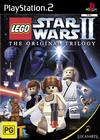
Lego Star Wars II Post-Mortem

Lego Star Wars II for the PlayStation 2 is packed with style, innovation, and great gameplay, and yet it just isn't as good a game as its predecessor.

I've actually had this one sitting next to my laptop for a while, begging me to post-mortem it so it can go back to its home on my game rack. Somehow I've just never gotten around to putting up the post - probably because I've already had the chance to vent about some of its problems.

For those unfamiliar with the series, Lego Star Wars is a fairly simple game concept - it's Star Wars, done entirely with Lego, formatted as a platforming-action videogame. The original title, which covered the plot of the three prequel movies, was an absolutely wonderful moment in gaming. It had intuitive controls, family-friendly difficulty, a great sliding scale of objectives, and more charm and humour than you could poke a lightsaber at.

If it had one problem, it was a lack of length. From one corner of the interblog to the other, players were unanimous in criticising the game for its overall shortage of content, best exemplified by the fact you could finish everything the game had to offer within a single day. Even I took a shot at the game (amidst an otherwise glowing review), although I did refrain from using the phrase "I've found longer games growing on food I left behind the couch."

When it came to creating Lego Star Wars 2, it should not be said that Traveller's Tales was deaf to criticism.

Let me say this straight up - Lego Star Wars 2 is about three times as long as the original Lego Star Wars. That's not to say it has more content. It's roughly on a par with the first game. No, it's just going to take you three times as long to get through it.

There are a lot of fine things that have succeeded by taking roughly thirty seconds of gold and stretching them out over inanely lengthy periods. The sport of cricket is one. The entire wrestling career of Triple H is another. Robert Jordan's The Wheel of Time is a third. Lego Star Wars 2 is sadly not one of those things.

The game proceeds largely as the first one did. Upon starting the game, you'll be plonked down in a central mission hub (in this case the Mos Eisley Cantina), and tasked to make your way through the plot of the three original Star Wars films using a variety of little Lego characters. You can do these in a fairly non-linear fashion - once you complete the first level, you can jump straight to Empire Strikes Back or Return of the Jedi without having to complete A New Hope. Completing levels involves running, jumping and shooting your way around a variety of generic platforming levels, which are themed after particular segments of the movies.

Each level can be completed in both Story Mode and Free Play. Story Mode is a straight run through the level using the appropriate characters as assigned by the game. You'll play as (for example) Luke as he returns from the Jundland Wastes to the Lars Homestead. Generally you're followed around by an entourage of other characters, such as Obi-Wan, R2D2 or C3PO. You can change to any other character in your entourage on the fly. In addition, a second player can help you out by controlling a character.

In Free Play mode you have access to a much wider range of characters, chosen from a pool that you've unlocked. Various characters have different abilities, so you'll want a good selection of powers at your command. For instance, Obi-Wan and other Jedi can move Lego bricks through the power of the force, while R2D2 can open certain locks and hover horizontally for short distances. Many bonus sections of levels can't be reached in Story Mode, requiring you to return in Free Play with special characters to find all the secrets.

Each level has a set of 10 minikit canisters to find. Uncovering all ten (which usually requires playing in Free Mode) rewards you by putting a Star Wars-themed Lego vehicle on display at the Cantina, and by showering you with Lego studs (which are the game's currency). Each level also has a stud-collection target - finding that many Lego studs within a level rewards you with the status of "True Jedi". That's not all - there's also a red power brick on each level which unlocks a cheat or power-up for purchase at the cantina shop.

Each target you meet in the game will reward you with a Gold Lego Brick. These can be assembled back at the Cantina into a range of doorways which give access to bonus levels. None of these bonus levels are very interesting, with the exception of a short reasonably fun area themed after classic non-Star Wars Lego.

All that unlocking may sound like a blast, but it's really not. For example, you'll need to obtain the functionally identical True Jedi status on both Story and Free Play mode, which is every bit as tedious as it sounds. The canisters and power bricks are placed poorly, with the design philosophy apparently being to deceive and defeat the player, rather than reward them for creative exploration. You'll probably end up turning quickly to an FAQ to get them all, unlike in the first game where this goal was reasonably achievable without external aids. The fun in Lego Star Wars 2 lasts almost exactly the same length of time as it did on the franchise's first outing - it's just that this time when the fun's over the game is still going.

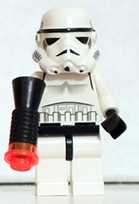
The level designs are mostly broken this time around too. Rather than promoting fast-paced see-what-happens gameplay in the tradition of the first game, there's an emphasis on solving finicky problems, backtracking, and getting killed a lot. As an example, you'll often need to disguise yourself as a stormtrooper to open certain door locks. This is accomplished by obtaining a stormtrooper helmet from a dispenser located somewhere on the level. Once you have the helmet, you have to get back to the lock while still wearing the helmet. The catch is, if you take any damage whatsoever, the helmet falls off, requiring you to walk back to the dispenser.

These sections are intensely aggravating. There's one bit like this on the Death Star which involves a lift which will have you wanting to apply fruit peelers to the faces of the game's developers. The result is uneven pacing, inordinately frustrating punishment for very small failures, and game segments which are less a challenge of your skill than they are of your patience.

What makes it all worse, of course, is the fact that many of the levels have unending waves of enemies, which just keep coming at you. Sometimes you can shut off these enemy attacks by closing doors or pulling switches, but more often you just can't. Strangely, the earlier levels are plagued by this problems more than the later levels, so if you perservere you may find your experience improving.

The game as a whole feels like something that's been created by many hands, rather than by a single guiding intellect. Certain levels are clearly designed by totally different minds than the ones that precede them. Courses of action that are encouraged in one area will be brutally punished in the next.

In all this game-bashing, I need to say that this is still a very good game. It's a top-shelf platformer that's a highly recommended buy if you're a fan of Star Wars, Lego, or just the genre as a whole. Each of the game's characters looks cute and highly true to the source material. Levels are punctuated by laugh-out-loud humorous cutscenes, with the little Lego characters engaging in a range of Jedi slapstick. The controls are reasonably tight, and there's a lot of fun to be had.

It's just that it's not as good a game as what came before it. What was cute, clever and fun the first time round is now mainstream, homogenised and mixed up with an extra-big helping of annoying. It's likely a lot of people who are choosing which of the games to buy will go with this one just because it's based on the better movies, but if you're a gamer of taste then play the original.

Friday, December 08, 2006

Upcoming Game Releases - Australia

More to remind myself than anything else, here's forthcoming game releases over the next few months in Australia that look interesting.

Dec 12 - Myst (PSP)
The frustrating, shallow, and visually attractive point-n-click puzzler finds a natural home on Sony's frustrating, shallow and visually attractive handheld.

Jan 12 - Lost Planet: Extreme Condition (X360)
The Halo-esque first person shooter I got to try out at TGS. I don't own a 360 but this game's come closer to persuading me than anything yet.

Jan 17 - World of Warcraft: The Burning Crusade (PC)
Blizzard's MMOG expansion is probably going to sell considerably better than most full fledged games.

Feb 8 - Rule of Rose (PS2)
Despite all the mediocre reviews it's gotten, I still want to play this disturbing survival horror populated by evil 1930s teen and pre-teen girls. Can't believe that the OFLC let this one slip past, but I guess their loss is Australia's gain.

Feb 8 - Contact (DS)
It's what all the cool kids in the blogging circle seem to be playing, so I'm dying to try it to maintain my guru-like position at the top of the interweb's totem pole.

Feb 22 - EA Replay (PSP)
EA Replay is an anthology collection, but what an anthology collection! Ultima VII, Syndicate, all the Road Rash games, both Jungle and Desert Strike, Virtual Pinball, Mutant League Football, Budokan and the original Wing Commander. I'm almost willing to forgive EA their many sins just because of this collection. Almost.

To the best of my knowledge there's still no Australian release date for Final Fantasy XII (PS2), Metal Gear Solid Portable Ops (PSP), Elite Beat Agents (DS) or Elebits (Wii). Anyone care to tell me differently?

Saturday, November 18, 2006

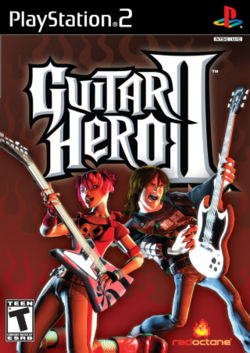
Guitar Hero 2 Post-Mortem

Guitar Hero 2 is a lot of fun, and features some excellent design aspects, but the extreme difficulty and song selection may exclude some new players.

Guitar Hero 2 largely follows the same format as the original game. In fact, if you've played the first you'll be able to jump right in and barely notice the changes. Coloured notes move down the screen towards you, in time with a musical track, and you have to hold the matching fret buttons on a novelty guitar controller and strum at the appropriate time. There's a whammy bar to make those long notes interesting, and you can tilt the guitar upright to deploy "star power" and start the audience cheering and clapping along.

If you've bought both this game and the original, you'll end up with two guitars, so it's a good thing that Guitar Hero 2 includes some new multiplayer modes. "Face Off" makes a return from the original game, which sees each song divided up between the two players, with Player 1 taking a riff, then Player 2, and so forth, with both players joining in on the chorus and ending. There's also "Pro Face Off", which lets both players play the entire song at the same time.

The most interesting new mode, though, is "Co-operative". Here, one player plays the song's lead guitar track in its entirety, while the other player takes the rhythmn or bass track (depending on the song). Players share a single score, star power meter, and rock meter. The effectiveness of this mode really varies from song to song - Killing In The Name Of and John The Fisherman, for example, have killer basslines, where you can really tell if your bass player screws up. On some others, though, the lead guitarist may as well be playing alone, as you can barely hear the other player's efforts. When it works, though, it's a lot of fun.

The sound balance as a whole throughout the game is fairly sub-par. The lead guitar is nice and loud, but the vocals are often barely audible, the rythmn and bass lines vary in quality, and the crowd cheers and special effects are often loud enough to drown out the drum track and leave you struggling to find the beat. You can mess with the audio settings to some extent, but you can't isolate the guitar tracks individually or separate the vocals from the rest of the band, so it's hard to get a satsifactory result.

The track listing isn't quite as great as the first time around either. Guitar Hero 2 has an unremitting focus on metal and hard rock. Despite the inclusion of songs like Rock This City and Heart Shaped Box, the sequel just doesn't have the same generation-spanning appeal as the original game. Metal fans will likely love it, but those who enjoyed the first game for tracks like More Than A Feeling or Killer Queen might feel a little left out.

It also doesn't help that most of the songs are covers, and some of those covers are outright appalling. Killing In The Name Of, You Really Got Me and Misirlou are all particularly nasty, bearing little if any resemblance to the versions you know and love. On the other hand, Primus apparently provided the gold masters of John The Fisherman, so you can hear that one in whatever original glory it can be said to possess.

The bonus songs are great, though. Guitar Hero 2 follows the tradition of its predecessor by including a bunch of indie and lesser known artists as optional extras, including some fantastic tracks like Buckethead's Jordan. Plus you can play Thunderhorse by Dethklok from the Adult Swim cartoon Metalocalypse, and the extended version of Homestar Runner's Trogdor.

Probably the most controversial aspect of Guitar Hero 2 is the difficulty. It should be said straight up that Guitar Hero 2 has one of the best tutorial schemes ever used in a game. It's short and to the point. I've seen maybe a half dozen people use it now, and it does a fantastic job of not only teaching you the basics but also building your confidence and inducting you into the atmosphere of the game. The tutorials are followed up by supplementary tips on loading screens prompting players to try out techniques they may not have attempted before, or explaining the game mechanics in more depths.

All that teaching will go to good use, because Guitar Hero 2 is vastly more difficult than its predecessor. Easy mode is still fairly easy, and works fine as a "party" difficulty. Medium, though, is more akin to the original game's Hard mode, and Hard is exponentially harder again, throwing five frets, three-note chords, and long complicated rhythm passages at you until you want to cry. It's likely that a lot of players will just hit a brick wall at the end of Medium and not be able to progress further, which is more than a little disappointing.

For all the difficulty, when you do manage to make the skill jumps necessary to conquer previously impossible songs, it's incredibly satisfying. The game doesn't need to reward you - the mere consciousness of the insane fingering you just pulled off is deeply motivating. Very few games have ever motivated me as much to keep improving merely for the sense of mastering the skills.

There's a practice mode this time around, that lets you slow down songs to learn the fingering, or play (for example) just the chorus, or just the solo. I haven't actually found it very useful - I prefer to just keep repeating the song - but I'm sure some people will get a lot out of it.

Guitar Hero 2 still holds up well as a party game. The difficulty and song selection mean it's less suitable for non-gamers than the original, but on the other hand the wider variety of multiplayer modes compensate.

Thanks to Sim for coming down from Sydney for a marathon two-day Guitar Hero session. It turns out she's a fiend on a bass guitar and I wouldn't have been able to unlock all the extra bass guitars without her.

Tuesday, November 14, 2006

Guitar Hero II - First Impressions

Guitar Hero II came out in Australia today, and I have my copy. It comes complete with new guitar, which I have obligingly adorned with a zombie teddybear sticker from one of the large selection of decals provided with the game.

The first thing that jumps out at you is that it's hard. In the original game, I could beat No One Knows on Expert, and have a pretty good stab at Bark at the Moon on Hard. In Guitar Hero II I'm being severely challenged by the game's third song (Surrender) on the default difficulty. It's insane.

Also, the cover artists blow. A bunch of songs that should be instant classics are butchered by some horrible cover vocals. I think the developers realised this, too, because the default audio settings have the vocals turned way down so you can hardly hear them. That's not too big a fault, because after all, the guitar's the star here, but if you're a fan of tracks like You Really Got Me or Who Was In My Room Last Night then you'll be ready to use your shiny new guitar to bludgeon someone to death.

That aside, it's great. Moments after firing up a rendition of Mother you'll be strutting around and jamming the whammy bar like there's no tomorrow. It's really a blast.

I haven't had a chance to try the multiplayer yet, but having bought both games I now have two guitars, so some axe-grinding showdowns are in store for the future.

Also, in case you haven't been exposed to the interblog for the last month and have thus been coccooned from news like some kind of contagious leper-baby, the game features both Deathklok and Trogdor.

Because the Trogdor comes in the NI-IGHT!

Monday, November 13, 2006

The Endless Legions

I hate games where enemies endlessly respawn.

Well, okay, that's a lie. In the context of an RPG it's not only acceptable, it's desirable. If the enemies don't respawn, then where will you harvest your precious, precious XP?

And in survival horror games, used intelligently and in moderation, it puts a little bite of desperation into the proceedings, and forces the player to keep moving, instead of just vegetating in their comfort zone.

But why in the holy name of Miyamoto would you include unstoppable rampaging respawning armies in what is allegedly an all-ages exploration-based platformer? And I'm talking here, of course, about Lego Star Wars II.

I've got a post mortem of this game coming. Short version: it's great, but it bollockses up everything that was clever about the first one. High on my list of criticisms will be the fact that almost every screen of the damn game, and particularly the early levels, is filled with an endless onslaught of stormtroopers. Forget exploration, puzzle solving, and free-roaming goodness - you'll be too bogged down clearing white-helmeted nazis off your back every three seconds to enjoy any of those things. It's a mark of shame that the game only really becomes fun once you've unlocked the invincibility power-up.

Can I just put a fervent plea out there, to all those game designers who might be reading? Please, please don't add unlimited supplies of enemies to your game unless you have a really, really good reason for it. There's no shame in your game being too easy. There is shame in your game being stupidly annoying.

Friday, November 10, 2006

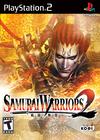
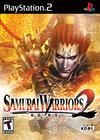
Samurai Warriors 2 Post-Mortem

Samurai Warriors 2 for the PS2 continues Koei's franchise of Dynasty Warriors and Samurai Warriors games, and despite only marginal changes from the last edition, is probably the best game they've made yet.

The Dynasty Warriors series put the player in the role of a legendary warrior in the era of the Romance of the Three Kingdoms, and charged them with cutting a swathe across sprawling 3D battlefields packed with literally thousands of enemy soldiers. The Samurai Warriors series transposes this premise to feudal Japan. Samurai Warriors 2 loosely follows Japanese history from the rise of Nobunaga Oda through to the assumption of power by Ieyasu Tokugawa.

The game has some 26 playable characters, ranging from Nobunaga and Ieyasu through to master swordsman Musashi Miyamoto and ninja Hanzo Hattori. Each of these characters is significantly more... extreme... than history might indicate. Nobunaga, for example, apparently commands all manner of demonic magics. Kotaro Fuma can throw fireballs. Ieyasu Tokugawa carries an honest-to-god cannon around the battlefield, which seems to ignore all rules of recoil and reload times.

When you take these characters to the battlefield, you'll basically be turned loose on a vast army and left more or less free to decimate them as you see fit. Generally, you'll have an army of your own backing you up, with a general at the head who you have to protect or risk losing the battle. As you wander around slaughtering your foe, you'll hear the chatter of generals on both sides of the battle discussing their changing fortunes, ordering ambushes, taunting their rivals, and announcing charges and counter-charges. Generally, you'll want to pay attention to this chatter, as not only do you have the opportunity to become involved in their schemes by co-ordinating or thwarting their stragems, but it is in some cases fairly vital. You'll need to capture fortresses, defend cannon emplacements, prevent assassinations, escort spies, and achieve a whole bunch of other objectives.

These in-battle objectives have been tightened up a lot from previous games in the series. Firstly, they're greater in both number and variety than previously. There's usually at least two things you can be doing at any given time, which is great for two-player games as the second player will always have something meaningful to do. Secondly, they're more important. Where previously you could largely ignore the general chatter and just kill stuff, now you'll generally have to finish at least a couple of sub-goals in order to win a battle. This is a change for the better, as it lends each battle a distinctive character, breaks up the repetition, and gives the feeling that you're actually making strategic decisions which influence the course of the battle. And you're still largely free to do your own thing most of the time.

As you win battles, your character will level up in a variety of ways. This, too, is handled better than previous installments in the series. Firstly, levelling up is well matched to the progress of the plot, so you'll rarely need to repeat a level to gain XP - you can just play straight through. Your stats rise as you gain levels, which is a much better system than Dynasty Warriors, which saw you farming levels for rare stat-up items.

You'll also gain gold as you play, from defeating officers, accomplishing sub-goals, and just winning battles. Gold can be spent to buy new mounts, new bodyguards, upgrade your weapons, and most importantly to buy skills. Skills provide passive bonuses on the battlefield, including raising your basic stats, giving you increased effect from healing items, and strengthening your apocalyptic "True Musou" attack. Skills can also be randomly "stolen" from defeated enemy officers.

The game's Story Mode features a unique story for each character, detailing their place in Japanese history over five or six stages of battle. These are reasonably historically accurate, and you'll likely learn a fact or two as you play, although there's a decent amount of "what if" speculation for some of the minor characters or characters who died before achieving their dreams. Notably, there's been significant licence taken with the assassination of Nobunaga Oda.

There's also a Free Mode, letting you play any stage with any character, and a Survival Mode. Survival Mode challenges you to fight your way through 100 floors of a giant castle. Every five floors you have the opportunity to pick a mission, which will then play out over the next five floors. If you complete missions successfully, you earn bonus gold, and occasionally unlock new mounts, skills, or characters. It's a lot more fun than the Survival Modes of previous games in the franchise.

You can play Story Mode or Free mode co-operatively with a second player. Actually, the missions are so hectic you'll often feel like you need a second player just to stay in control of the fairly large battlefields. Two-player mode works in splitscreen, which involves some graphical compromises but is perfectly workable and a lot of fun. There's also a Monopoly-esque boardgame called Sugoroku which can be played with up to four players using a multi-tap. Sugoroku is fun, and worth a couple of tries, but is unlikely to hold your attention in the long term.

The main criticism levelled at the Dynasty and Samurai Warriors games is that they're repetitive, and that's an accusation fairly made. But, it could be said, Tetris is repetitive. It doesn't really matter that gameplay is repetitive when that gameplay is inherently entertaining. And, at least for me, going through battalions of soldiers like a hot knife through butter never gets old. No other game delivers an experience quite like Samurai Warriors, and it's an experience you'll either tire of in minutes, or be happy repeating for uncounted hours.

It's also true that Samurai Warriors 2 is effectively the same game as the original Samurai Warriors, and is very similar to pretty much all the Dynasty Warriors games. Like a sports franchise, Koei releases a new Warriors game every year with little more than a roster update and some new arenas. It may be the case that if you already have Samurai Warriors it's not worth your money to purchase the sequel. But on the other hand, Samurai Warriors 2 is a remarkably fun game, and for whatever reason the original Samurai Warriors was never released in Australia.

Graphically, Samurai Warriors looks good, but not great. The models are reasonably detailed, but some compromises have been made in order to depict the throngs of enemies that the game demands. The fog-of-war is still present and unfortunately close, but never really impinges on your awareness. The game overall looks about as good as Samurai Warriors or Dynasty Warriors 5. I'd love to see it on the XBox 360, as I can only assume the graphics are significantly better. Artistically, it's nothing special - less ugly than some of its ancestors, and sporting some great character design, but still plagued by some pretty bland battlefields and enemy troops.

The sound is similarly middle-of-the-road. Character voices are considerably better acted than the earlier games, but are still by no means particularly good. The best that can be said is that they're rarely irritating. The music combines traditional Japanese motifs with hard electric-guitar rock, and again is neither irritating nor memorable. The sound effects are probably the best part of the bag, with a great mix of screams, yells, horse hoofbeats, weapon swings, musket fires, and suchlike. They're still probably not going to win awards, though.

For my money, Samurai Warriors 2 is the best Warriors game yet. The level design is exemplary, with missions that are tight and focused without straight-jacketing the player. Levelling up is natural and free from the grind that plagued earlier versions. The character stories are strong, and the Japanese setting seems to suit the flavour of the game better than the Chinese one ever did. All in all, this is not only a must-have for existing fans of the series, but an ideal point to jump on board if you've never played a Warriors game before.

Tuesday, October 24, 2006

PS3 Backwards Compatibility

[News] [Computer Gaming]

So the PS3 isn't region free as far as backwards compatibility goes, it seems.

In the context of an article about Sony prosecuting companies illegally importing Sony products into the European Union, the following tidbit slipped out:

The company explained the reasoning behind this policy as trying to "protect" European consumers "from being sold hardware that does not conform to strict EU or UK consumer safety standards (due to voltage supply differences etc.), is not (in PS3's case) backwards compatible with either PS1 or PS2 software, will not play European Blu-ray movies or DVDs, and will not be covered by warranty."
- via Gamespot (emphasis added)
Well, that just sucks. So here I am with my plans for importing all those PS1 RPGs that never made it to Australia scuttled. It seems kind of... stupid. Looks like the mod chip market won't be dieing out after all.

Or, y'know, we can just keep hoping that this statement came from a marketing guy with no idea what he's talking about.

Sunday, March 26, 2006

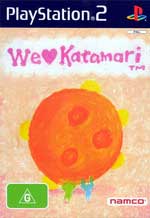
We Really Do Love Katamari


[Computer Gaming]

I've just sunk my gaming thumbs into Namco's We Love Katamari for the Playstation 2, the sequel to the surprisingly successfull Katamari Damacy (unreleased in Europe and Australia). And it's absolutely brilliant.

I cannot recommend this game highly enough. First, it sells (new) at the budget price point of between $40 and $60, depending on where you get it from. So second-hand you're looking at probably not more than $25.

Secondly, don't be fooled by the kiddie packaging and the G rating. There's something in this for everyone. The game places you in the role of the Prince of Cosmos, the son of the flamboyant King Of All Cosmos (a giant with handlebar moustaches, a love for frills, and a head shaped like a horizontal rolling pin). During the last game, the King destroyed all the stars in Cosmos, and challenged the Prince to use a magical ball called a katamari to roll up conglomerations of matter on earth into giant spheres which the King could use to replace the stars.

Don't worry. I don't understand either.

But the plot's really not important. In fact, even the game itself pokes fun at its completely off the wall characters and stylings. The important thing is, you get to push a ball around and roll stuff up. And by "stuff", I mean paperclips, cookies, milk bottles, ducks, flowers, books, dogs, people, the Eiffel Tower, and, eventually, the Sun. Your ball grows in size with every item you roll up, but you can only roll things up once your ball is big enough to accept them. Luckily, there's no shortage of items lying around... you're averaging multiple items per second most of the time. Everything you touch sticks to the outside of your katamari, and you can see each item actually on the ball, at least until it gets covered up. It's a blast rolling up a little dancing gnome and then seeing him get repeatedly crushed as you roll the katamari at the next target.

It would be a really simple, amusing game, were it not for the control scheme, which challenges you to push the katamari with "both hands". In practice, this works out to having to use both of the PS2 controller's analogue sticks simultaneously. Up on both moves the ball forward, while up on one and down on the other lets you move the Prince around the outside of the ball to push it in a different direction. A quick push-in of both sticks does a 180 degree turn, and so forth. It's highly non-intuitive, but it could be argued that this constant battle with the controls is part of both the charm and the challenge of the game.

It's multiplayer, too, but I haven't had a chance to try that yet, and I suspect I may have a little trouble. The control scheme makes it probably not casual enough to tempt my girlfriend into a session, but the essential wierdness and lack of the ability to shoot things in the head may make it difficult to talk my gaming friends into giving it a serious try.

It's a horribly addictive game, and I might have to go have another session of it right now. In fact, I think I will.