Showing posts with label Konami. Show all posts

Friday, September 26, 2008

Silent Hill Homecoming Refused Classification

The title speaks for itself. Silent Hill Homecoming (aka Silent Hill 5) has been refused classification by Australia's Classification Board, which has the effect under state and territory law of banning it. Which is to say that it would likely have fit into an R18+ classification if one existed, but it's been shafted by the lack of such a classification for videogames.

Canberra residents who are outraged by videogame censorship are strongly encouraged to vote for me in the ungrouped column at the October 18 ACT election.

For those elsewhere in Australia, the path is to get the attention of your state Attorney-General, preferably in person or by phone, but in the alternative by snail-mail or polite, literate email.

Wednesday, September 24, 2008

Silent Hill Origins

I come from the backwards world. I thought that Silent Hill 2 was easily the worst of the franchise, while Silent Hill 4: The Room was the series' creative peak. I realise I'm alone in this, but to be perfectly honest, I'm right and you're wrong, so you can all go to hell.

Which brings me to Silent Hill: Origins, which I'm going to have to describe as "the worst Silent Hill since the second one". It originally came out for the PSP, and then, because the PSP is crap, got ported to a real system, in this case the PlayStation 2.

The Silent Hill franchise is about ordinary people who, upon visiting (or living near) the titular town find themselves inexplicably transported to a hell dimension where everything is similar and yet horribly different. That, in fact, is exactly how I felt upon firing up Silent Hill Origins. This is definitely Silent Hill, but it's Silent Hill as performed by a really dodgy cover band.

It's developed by Climax, a western company whose previous track record consists almost entirely of bad ports. All the previous games had been by Konami's Nippon-based Team Silent. It's pretty clear that the distinctive Japanese sensibility for horror has gotten lost somewhere along the way, because Origins is less creepy than it is shocktackular. A rising sense of terror is replaced with the "suddenly, zombies" syndrome, where opening any given door leads to nasties immediately in your face, without explanation.

Origins is a direct prequel to the first Silent Hill. You play as Travis, a truck driver who has an encounter with series poster-girl Alessa and then decides to play explorer in the nearby abandoned town.

The "prequel" angle leads to a lot of opportunities for fan nostalgia. You'll encounter plenty of characters from previous games, often in a fairly forced fashion, and revisit key locations from the franchise including Alchemilla General Hospital. There are some great moments, like seeing the iconic "Welcome to Silent Hill" sign come looming out of the fog, but there are a fair helping of points that are just silly, too.

The silliest aspect of the game comes from the re-tooled weapon system. In previous games, firearms had limited ammunition, while melee weapons lasted forever, meaning that melee was often the best choice for most fights. Origins addresses this by making melee weapons incredibly plentiful, but having them break after a couple of hits. It's a system much like that employed in Dead Rising, where any number of regular objects can be picked up and used as weapons, including wooden planks, IV stands and toasters. Unfortunately, it looks stupid. Wandering around a creepy hospital carrying a toaster just makes Travis look like a particularly incompetent burglar.

Also, the combat is clunky and unresponsive, even by the standards of Silent Hill. To make matters worse, to see the game's "good ending" you'll need to down less than 70 foes over the course of the game, so in the end you'll almost entirely bypass the combat portion of the game and just run past most foes.

The developers apparently playtested this "running past things" strategy and found it too easy, so they've compensated by giving practically every enemy the ability to grab you from about half a screen away. There's no defence against these grabs, and escaping them involves an irritating button-mashing minigame. On the whole, the game's monsters seem not spooky but just annoyingly cheap.

The one redeeming feature to the game is the soundtrack, which is by franchise composer Akira Yamaoka and is some of his best work. The music is absolutely gorgeous and you'll sometimes want to stop playing just to make sure you've heard the entire music track before moving forwards.

Music can't save a tragically poor game, though. If you're a Silent Hill fan you might want to get this just for the sake of completeness, but if you've got a limited budget for survival horror then this is not the game you've been waiting for.

Wednesday, July 30, 2008

Game Publisher Profit & Loss

Via Kotaku, profit and loss margins for the 20 top game publishers. On its face this reflects what might be thought to be common sense; publishers who produce quality make a profit, while publishers that make rubbish pay for it.

It's not quite that simple, of course. The numbers include hardware divisions, so Microsoft shows a large loss representing their ongoing efforts to advance their market share. I seem to recall that Microsoft actually posted their first games division profit last quarter so next year's chart might look very different. Sony, of course, were more focused on launching Blu-Ray than they were on winning the console war this time around so their massive losses are less of a defeat than they are an investment in the company's ongoing future.

EA have recently come out and said they made a mistake by not backing the Wii as the winner in this console generation; their somewhat blinkered focus on the PS3 and 360 hasn't helped them over the last year. Ubisoft, on the other hand, are doing quite well, probably deriving both from their excellent Montreal and Montpellier studios, and from the way they were astoundingly quick to fill the Wii market with shovelware.

Atari, Midway and Sega are all victims of their own poor quality titles. These companies couldn't find quality gaming if you shackled it to their wrist.

My guess on Take 2's dismal performance here is that it's got something to do with their ongoing legal troubles. Take 2 of course includes Rockstar, whose games sell like hotcakes but can't seem to stay out of court. It's probably also worth noting that the chart above caps out before the release of Grand Theft Auto 4 so the profits from that are obviously not included.

Namco, Capcom and Squeenix are all excellent examples of producing good games based on original IP on a regular basis. We like what they make, and we pay them money for it. Everyone's a winner.

Vivendi is of course just another way of saying "Blizzard and Sierra"; most of that profit you see there is World of Warcraft alone. Vivendi's now merged with Activision so it's not unreasonable to expect a monster result next year from the resulting juggernaut.

Konami's interesting in that it feels like it should be down next to Capcom and Namco but instead they're storming the market. It's especially interesting as this chart predates the release of Metal Gear Solid 4. Konami's doing unusually well for a company that's shown such partisan support for this generation's console loser, the PS3. Does anyone have insight as to what's going on here?

Disney comes as a surprise to hardcore gamers; this is mostly just licensed games being made dirt cheap and sold by the truckload. It's a bit depressing that this kind of rubbish is so very profitable. Disney does own a few smaller studios like Lumines creator Q Entertainment, though.

And finally Nintendo tops the chart; they're the only company currently making a profit (and a fairly massive profit at that) on their hardware division, through both the Wii and the DS, but they're also the major developer for both those platforms, and platform-exclusive games like Super Smash Bros Brawl and Super Mario Galaxy spent significant periods of time at the top of sales charts across all consoles. Nintendo was making a profit even during the lame-duck years of the Gamecube, and now that they've actually got quality hardware on the market they're unstoppable.

Saturday, July 12, 2008

Great Gaming Music #8: Silent Hill


Akira Yamaoka's music for Silent Hill is the pinnacle of the field of Japanese survival-horror soundtracks. While his Theme of Laura from Silent Hill 2 seems to have become the default franchise mascot, I vastly prefer his creepy musical introduction to the original game, featured here alongside footage from the Silent Hill movie.

I think one of the reasons why Yamaoka's work on Silent Hill is so memorable is the way he avoids a lot of cliches of horror music. He marries up genuinely creepy passages of music with traditional guitar to reflect the juxtaposition of nightmare and normal which is a running theme of the series.

Not only did Yamaoka compose the soundtracks for all four of the original Silent Hill games plus Origins, Homecoming, and the film: he also worked as sound director on the core titles. Wikipedia informs that he recorded over 200 different footstep sounds for use in Silent Hill 2. His music has also been featured heavily throughout Konami's Beatmania IIDX franchise.

Great Gaming Music #6: Metal Gear Solid Main Theme


Harry Gregson-Williams is one of the most talented composers working Hollywood today, and his Metal Gear Solid Main Theme is easily one of his best works. The version shown above is as featured in the opening to Metal Gear Solid 2: Substance, which for my money is the best of the several arrangements showcased throughout the franchise. The music for the Metal Gear Solid games, combined with Hideo Kojima's direction, are responsible for the memorable big-screen cinematic feel of the franchise.

Gregson-Williams has also produced scores for a huge range of big-budget films of the last decade, including but not limited to the two Chronicles of Narnia movies, the Shrek movies, and Kingdom of Heaven. He collaborated with Hans Zimmer on The Rock and will be scoring the upcoming X-Men Origins: Wolverine movie.

Great Gaming Music #1: Kiss Me Sunlights


If aliens ever put humanity on trial, the fact that so few of us have played Zone of the Enders will not weigh in our favour. ZOE and its sequel The Second Runner both boast incredible soundtracks; featured here is the ZOE opening theme "Kiss Me Sunlights" as composed and performed by Heart of Air.

Heart of Air also contributed "Blue Flow" to the anime Haibane Renmei (which I love to death). The Heart of Air duo consists of Nanase Hikaru and Itou Masumi. Itou may also be known to anime fans for her work on the soundtracks to Azumanga Daioh, Scrapped Princess and Galaxy Angels, among others.

Sunday, July 06, 2008

On The Way: Elebits DS

There's something of a trend going on right now. It involves developers taking my favourite games of the past few years and gutting them with a rusty knife.

I've previously mentioned the abomination that is Drawn to Life: Spongebob Squarepants Edition. In a similar vein, Konami have announced that the next iteration of Elebits (or Eledees to us Aussies) will be a top-down action RPG for the DS.

Elebits: The Adventures of Kai & Zero appears to pick up where the original Wii version left off, judging from the title. Where the first game was a wonderful sandbox in which you used light-gun style gameplay to lift and throw furniture in the eternal search for "Elebits", the DS version looks a little like Secret of Mana meets Boktai. Which were both great games, but deeply lacking in the "tossing two storey houses as though they were beachballs" department.

Boo. Boo, I say. Poor show, Konami. Make a real Elebits sequel and forget about this DS nonsense.

Friday, June 06, 2008

Gaming News In Brief

A few bits and pieces:

* The Bioshock movie, to be directed by Gore Verbinski (Pirates of the Caribbean), is still in the works with John Logan (The Aviator) writing the screenplay, but don't hold your breath for it - the anticipated release date is 2012, to coincide with a possible Bioshock 3. (Bioshock 2 is making its way to shelves in third-quarter 2009.) (Read more)

* SoulCalibur IV will feature The Secret Apprentice (the protagonist of the upcoming Star Wars: Force Unleashed) as a playable character, alongside Yoda on the XBox 360 and Darth Vader on the PS3. (Read more)

* Developer Goichi Suda (No More Heroes, killer7) is working on something called "Project S", which is apparently a resurrection of Hideo Kojima's Snatcher franchise. Actually, that news dates back to April but the awesome keeps it fresh. The first part of the program is, for some reason, a radio drama (not a game), but if we're lucky a re-release of the original game might feature somewhere. Snatcher has previously only seen store shelves in PAL regions in the form of a Mega-CD game in 1994; the US had it slightly better with PlayStation and Saturn versions. (Read more)

* The Sci-Fi Channel says they're running some kind of TV show / MMO hybrid in the near future, with the actions of the one affecting the other and vice versa. It sounds a lot like what NBC tried (rather ham-fistedly) with its Heroes ARG, but I remain hopeful that this won't be the embarassing debacle that it sounds like. (Read more)

Monday, April 28, 2008

Castlevania: Portrait of Ruin

Sometimes I feel like Galileo. I walk the streets, informing people that the Castlevania franchise is really rather frighteningly good, and the only response I get is a kind of quiet enthusiasm for burning me at the stake.

What with winter coming on, that stake is looking like a viable alternative to the frigid wasteland that men have come to call Canberra, so let me say once again that these games are made out of candy-flavoured sherbert-infused platinum.

Castlevania: Portrait of Ruin is the latest entry in the series, and is available on the Nintendo DS. Like past iterations, you'll be playing the role of a vampire hunter tasked with exploring Dracula's castle, beating the nine hells out of a wide variety of low-grade nasties, and eventually sending Captain Bitey himself to his well-earned demise.

Portait of Ruin is in 2D, and like a mad scientist it creates genius by grafting undemanding platforming mechanics to an open-world exploration core, with some RPG level grinding and item collection thrown in for good measure.

Dracula's castle is a big place, and you won't instantly be able to access all of it. But as you defeat bosses and find hidden areas, you'll become able to slide through tight spaces, jump higher and further, push heavy blocks, and eventually transform into an owl, all of which grant you access to new rooms and tougher bosses.

This time around you're paired up with a companion, the spell-casting Charlotte. As you will know if you have played Ico, being saddled with a female sidekick is Not A Good Thing (TM). Her attacks are based on a finite supply of magic points, which makes her a poor choice for exploring the castle, and even in boss fights her low defensive rating and rather limited range of spells makes her an iffy proposition.

Luckily you can turn Charlotte off by pressing the A button, and only bring her back out on the rare occasions that you find a use for her. With the weaker sex thus handily locked in the closet, you can go about enjoying Portrait of Ruin in pretty much exactly the same way as you have the last few games in the series.

Portrait of Ruin introduces a quest system, where an NPC ghost near the entrance of the castle hands out tasks for you to complete while exploring the castle. These typically require you to find a rare item or defeat a rare monster, and the rewards are most often new subweapons, skills, or pieces of equipment. For the most part they're completely optional but they provide some interesting variety to the normal Castlevania formula.

The game world is significantly bigger this time than the last couple of outings. Not only is Dracula's castle reasonably large, but you'll also be using portraits hung in key parts of the castle to travel to eight sub-worlds, each quite sizeable and featuring a boss fight at the end. Total play time adds up to maybe 15 hours, give or take depending on how much of a completionist you are.

The game unfortunately retains one of my key complaints from its predecessors. If you play this game entirely without the aid of an FAQ, you'll likely miss the last quarter of the game and get the "bad ending". Progressing to the good ending requires finding a fairly well-hidden spell and using it to win a certain boss fight in a non-standard way. That's just stupid game design, and it's potentially very frustrating to casual players.

Speaking of frustrating, I should add that the US version of this game shipped with a potentially game-breaking bug, for which you should also check an FAQ so as to not have to restart the game at around the halfway mark. European versions like mine are apparently patched and work fine.

Those gripes aside, Portrait of Ruin is an excellently paced game that is likeable and highly satisfying. If you haven't played a modern Castlevania game before then this is an excellent place to dive in, and I highly recommend it.

Friday, April 25, 2008

New Silent Hill In September

If you're a Silent Hill fan like myself you'll be pleased to know that the upcoming Silent Hill 5 has been given the name Silent Hill: Homecoming and will be released in Australia as early as September on XBox 360 and PS3.

The development company involved is unfortunately a bit horrific; Konami has outsourced the creation to The Collective, the perpetrators of such titles as The Da Vinci Code and Mark Ecko's Getting Up: Contents Under Pressure. In my mind's eye I picture the franchise chained in their basement and only getting fed once a week. Sometimes when it cries they beat it with a stick.

We're also gettting the PlayStation 2 port of the underwhelming Silent Hill Origins in May, which removes one of the few remaining reasons to keep your PSP charged. It's entirely possible if you get Origins and Homecoming together they may add up to being almost a real Silent Hill game.

Monday, June 04, 2007

Eledees Post-Mortem

If you've played Wii Sports, you've mastered Zelda, you're done with Excite Truck, and you're looking for something new to show off the potential of the Wii, then Eledees is DEFINITELY for you.

Eledees (known as Elebits in the US) is a game I got to see demonstrated at last year's Tokyo Game Show. I watched the Konami booth girls using the Wii remote to fling around heavy furniture, construction machinery, and the occasional house, and then went home to tell all and sundry how I'd just seen "Katamari with guns".

And I wasn't far wrong. Eledees takes most of the gameplay elements that worked so well in Katamari Damacy and its sequels and puts them into the context of a light-gun game. Some unfortunate design decisions and a lack of last-minute polish mean that it's ultimately not as good as any of the Katamari games, but as a novel and tactile use of the Wii control system it's definitely worth your time and money.

Eledees, for those not aware, are the nun-punchingly cute critters that live inside our electrical devices and make them work. Arriving on Earth from some kind of space-lightning-meteor many moons ago, Eledees have lived in harmony with humans for lo these many years. Unfortunately, something terribly vague has now happened, causing Eledees to strike en mass and hide under your couches, wardrobes and fine china instead of generating power like the subordinate slave race that they are.

It's (apparently) up to one exceptionally whiny kid named Kai to whip the no-good Eledees back into line with the aid of a trusty Capture Gun pilfered from his science-loving parents. The Capture Gun works a lot like the gravity gun from Half-Life 2, in that you'll be using it to pick up, rotate, shake, and otherwise zap the bejeezus out of absolutely anything that isn't nailed down (and some things that are).

Each stage is set within a fairly familiar domestic environment, starting with Kai's bedroom and ultimately working into the backyard, the city streets, and eventually a fairly over-the-top amusement park. You're given a time limit and tasked with capturing the heck out of the sundry Eledees hiding in the vicinity. Some Eledees are right there in plain sight, sound asleep and snoring gently, and you can zap 'em right there and then with your capture gun to add them to your collection. The majority, though, are hiding under or inside nearby items, so you'll be using your gun to pick up objects, shake them down for spare change, and eventually flick them out of your way with fairly explosive force.

Eledees come basically in two flavours. Some Eledees give you raw wattage when captured. Wattage counts towards the point total that you need to clear the level, so it's pretty valuable. Also, when your wattage reaches certain levels, items in the vicinity will power up, starting with the area's overhead lighting, and then moving on to things like microwaves, televisions and lawnmowers. You can switch on these powered items to trigger a flood of extra Eledees, which you'll want to quickly round up to add to your pool.

The other sort of Eledees will give you gun power. Your gun starts out at a pretty pathetic power quota each stage, but as you suck up power Eledees it levels up, giving you the ability to pick up progressively heavier items. Where at first you'll be straining to lift pizza boxes, it won't be long before you're shifting pianos, flipping bulldozers, and ultimately mucking about with the orbit of the moon.

The controls are mapped to a combination of the Wiimote and the nunchuk. You'll use the Wiimote like a light gun, hitting either button A or B to unleash your lightning-like capture stream. Zapping Eledees will add them to your captured collection, while hitting a movable object will lock the beam to the object. You can continue holding down A or B once you've locked onto an object to use the Wiimote to move the object around.

The Nunchuk uses the directional stick to facilitate your movement - up and down are forward and back, and left and right strafe. You can turn by aiming the Wiimote at the edges of the screen, which (by the way) works vastly better here than it ever did in Red Steel, although you'll still have some flaky moments. The nunchuk "shoulder buttons" let you crouch low to go toe-to-toe with ground-based Eledees, or stretch up to see over barriers and into drawers.

The basic gameplay of Eledees is fantastically good. Shooting Eledees and throwing around giant objects are visceral and rewarding experiences, and you'll be wanting more of both long after you've finished the game's 30 levels. Unfortunatley, Eledees throws some complications into the mix which work against many of its strong points.

For starters, some missions will arbitrarily challenge you to complete missions "quietly" or "without breaking things". These really amount to the same sort of gameplay - it means don't throw things around. Instead of cutting loose like some sort of gravity-gun-equipped-bull in a china shop, you'll have to gently lift items and then set them back into place. Luckily there aren't too many missions like this, because not only does it take the fun out of the best parts of the game design, but it's also ill suited to the controls.

Picking things up and throwing them around is easy, but you can also (in theory) rotate things by twisting the Wiimote left or right. In practice, you can really only turn things about forty degrees each way, because that's about as far as your wrist will go before your bones snap. As you have to pick things up in order to rotate them, and then put them down to allow your wrist to return to its normal position, rotating things in practice doesn't really work. It's fine for situations where the game asks you to turn doorknobs and taps, but when you need to turn a bin upside down to shake Eledees out it's just a pain.

Also, when you lock onto an object, the object will always remain as far away from you as it was when you zapped it, meaning if you want to bring an object closer to you you'll either have to back up, put it down, and walk forward again, or engage in some haphazard item-juggling with the Wiimote. The game blithely ignores this limitation by regularly tasking you to put one item inside another, or on top of another, or otherwise do something made difficult by the imprecise controls. When you hit the late-game level made almost entirely of these annoying puzzles you'll probably have a "Hulk smash" moment and end up just ripping the scenery apart with your grossly overpowered capture gun. What makes it doubly annoying is that it would have been very easy to set the D-pad on the Wiimote to allow you to draw in and push out captured objects.

The game ships with both a multiplayer mode and a level editor, which both seem initially promising but don't really pan out. The multiplayer mode lets up to four players share the same screen while competing to capture Eledees, but only Player 1 will get to control the camera angle and movement so it's not really a particularly fair fight. After a brief taste you'll probably wish that the possibilities of a split screen mode had been more thoroughly explored.

The level editor lets you play with a reasonably large number of objects, save levels, and share them with friends via WiiConnect, but ultimately the interface is fairly poor, and in any case the levels already included in the game are deep enough that you're unlikely to feel the need for additional challenges.

And the levels are deep - there's a staggering amount of different objects to toss around, about a zillion Eledees to find and capture, and a good number of bonus goals and objectives to complete, from finishing the occasionally devilishly hard Challenge missions to finding the three Pink Eledees hiding in each level.

Between levels you're shown what the developers laughingly refer to as a "story", involving Kai's quest to hunt the Eledees. The European release (redubbed to use the word Eledees instead of the US Elebits) features voice acting so awful that it will make you long for the masterful artistic talent of mid-80s anime dubs. Kai's voice in particular grates like nails on a chalkboard. The best bet is to skip these hideous outings and dive right into the gameplay.

Overall, Eledees is not without its faults (of which there are many), but as far as shooting-gallery-gravity-gun-sandbox games go, it's the clear leader in a field of one. It's a fantastic use of the potential of the Wii control system, and it's the sort of game that will leave all your friends wanting to have a go. As Wii releases continue to be more or less average for the foreseeable future, there's no good excuse to buy anything else for the system until you own this.

Sunday, May 27, 2007

Robbie The Rabbit in Eledees

I'm about halfway through Eledees for the Wii (Elebits in the United States), and I'm amused to note that in what is otherwise an aggressively child-oriented title, Konami has seen fit to throw in a brief visual reference to Silent Hill. In the process of exploring Eledees, the player encounters an amusement park. Displayed prominently on statues and park maps is none other than Robbie the Rabbit, the terrifying creepy mascot of the Lakeside Amusement Park who appears in Silent Hill 3 and 4. In Silent Hill he's first encountered drenched in what appears to be blood. In Eledees he's shown holding a delicious hot dog, and the descriptive text reads, "He loves ketchup. (That's not blood.)".

Awesome.

Monday, October 16, 2006

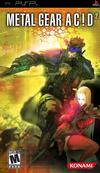
Metal Gear Acid 2 Post-Mortem

[Now Experiencing] [Computer Gaming]

The original Metal Gear Acid was an intriguing concept - a collectable card-gaming stealth espionage action game. Unfortunately it was plagued with a host of problems, including a laughably poor plot, glacially slow pacing, uninteresting enemies, horrible game balance, and a swarm of user interface inadequacies.

With the release of Metal Gear Acid 2, I'm pleased to announce that Kojima Studios has removed some of the interface inadequacies.

In Metal Gear Acid 2, you'll be taking control of the legendary hero Solid Snake on another of his patented stealth espionage missions into the heart of a terrorist-controlled military facility. Well, actually, it's not the Snake. It's a clone, or something. But close enough. The point is, you'll be sneaking your way through a good dozen or so enemy-packed levels on a quest to do away with yet another new giant-mech-like Metal Gear. And when I say "sneaking", I mean shooting holes in anything that moves, because it would take the patience of some kind of zen master to play this game the way it was meant to be played.

Like the first Metal Gear Acid, you won't be moving around in real time. Instead you'll be drawing cards from a deck and "playing" them to move around, equip and fire guns, and perform sundry other actions. All actions have a "cost", representing how much time they take to perform; if you use a lot of cost, your enemies will have a correspondingly greater number of actions before you get to act again.

You won't be going it alone, either. About a third of the way through the game you'll be joined by Venus, who's some sort of female assassin. From that point forward, you take on the game's missions as a pair, which makes for some theoretically interesting game mechanics. For instance, when both characters are able to target the same enemy, firing on that enemy will produce a bonus for "covering fire". With some weapons you can actually have both characters firing simultaneously, creating a kind of kill zone. If you were bothering to actually be stealthy, it also has some nice potentials in terms of one character creating a distraction so the other can sneak past a guard, and so forth. But you won't bother with stealth, so you're unlikely to actually use that potential.

As you progress through missions, you earn points, which can be spent at the intermission shop to buy "packs", which add new cards to your collection. You can use those cards to customise and improve the decks that Snake and Venus use during missions. You'll find that the power level of your cards hikes up dramatically as the game goes on, but the danger level of your opponents never significantly increases. As a result, the early missions where you have few cards can be a little tricky, while the later missions are laughably easy.

Of particular note as far as game balance goes are a set of cards which reduce your cost when played, effectively allowing you to act more often. Once you have enough of these cards in your deck, you'll find your able to string together many, many actions without letting your opponents respond. On some levels, you may reach the exit before the guards of the stage get to act. It breaks the immersion considerably. What's worse, this was a problem in the first game - but instead of being fixed, it's been made worse. There are now more cost reducing cards, and the new ones are even more powerful than the old ones.

As any fan of Metal Gear Solid knows, the most memorable parts of a good Metal Gear game are the boss fights, and sure enough Metal Gear Acid 2 features a good half dozen skirmishes with named individuals. But don't hope for enemies of the caliber of Psycho Mantis, or The Sorrow. Heck, you won't even find something as good as Vamp. Almost all of the bosses in Acid 2 are basically just big tanks of hit points. To defeat them you don't have to work out their pattern, or use a clever trick - you just have to pump them full of lots of bullets. Some of the early ones are actually less challenging than killing the regular guards. Even the final confrontation with Metal Gear itself is notably anticlimactic.

The plot itself is substantially better than the original Acid, but it's still more than a little lame. Like Acid, it takes place outside the Metal Gear Solid continuity, featuring a Snake who's clearly not the actual Snake we know and love from the Solid games. There's very little in the way of meaningful mystery or revelation going on, and you'll find yourself not really caring about what happens next.

As a side note, Acid 2 has an absolutely appalling treatment of its female characters. And I'm saying this as a person who has no real problem with playing the Smackdown vs Raw wrestling series. Acid features not just a fairly high level of innuendo and cheesecake, but it's completely contextually inappropriate. The character of Eva in Metal Gear Solid 3 may have gone around half-dressed most of the time, but it fit the whole James Bond ambience of that game. In Acid 2, the feeling is more of a gritty techno-thriller, and when the sharp professional Dr Takiyama happens to have a giant cleavage, a half open labcoat, and no bra or shirt underneath, it just looks grotesque. Likewise, the fact that Venus regularly bounces up and down on the balls of her feet and then looks down at the effect this has on her breasts just comes across as really bizarre.

The music in Acid 2 is passable if not special. It features a lot of musical motifs from the Solid games, along with some new music of its own. The mix works, but it's certainly not as memorable as Harry Gregson-Williams' scores for the PlayStation games. Sound effects are mostly passable footsteps, gun sounds, and the usual cast of alert and alarm noises that Metal Gear players are no doubt familiar with by now.

The graphics are a little better than the dark and muddy visuals that the first Acid demonstrated. Acid 2 goes for a comic-book cell-shaded look, which makes it easier to see what's going on, but doesn't really add much to the game as a whole. The graphics are technically strong but artistically uninteresting.

One of the gimmicks that Acid 2 made a big deal of during development was that the game would feature a 3D mode, and would ship with a 3D viewing apparatus called the "Solid Eye". It's important that you don't get excited by this. The Solid Eye is a cardboard box that you assemble yourself. The 3D effect is achieved by displaying a similar image on both the left and right of the PSP screen, and the box makes sure your left eye sees the left image and your right eye the right. Slight differences in the images produce the illusion of depth.

For the 3D effect to work correctly, you have to keep your face pressed to the cardboard box, eyes about six inches from the screen. Your eyes start to hurt after about five minutes. Needless to say, you won't be interested in playing the game like that, so after trying it once you'll probably leave the 3D mode switched off and never return to it. It's not tied into the game in any way - there's not any puzzles that require it or anything - so it's easy to forget the mode is even there.

The game also contains every cutscene from Metal Gear Solid 3 in a special theatre mode, and watching some of those in 3D is kind of cool, but if you've played Solid 3 you've seen them before, and if you haven't they'll spoil that vastly superior game for you, so again it's a bit of a pointless exercise. There's also some not-quite-soft-porn 3D, with some scantily clad Japanese women fondling replica guns and having waterfights and suchlike, which isn't even as interesting as it sounds.

The interface is significantly better than the original Acid. There's a lot of built in help features, which are handled well, in terms of being available without being annoying. Moving around is also relatively painless now. You can open doors and pick up items without sacrificing the rest of your move. A free look mode allows you to ascertain exactly what your enemies can and cannot see, making the stealth that you won't be doing that much easier. There's also a lot more information available in the deck construction area, although the fact that Acid 2 features more than twice as many cards as its predecessor means you'll still be spending an eye-gougingly long time scrolling through lists when it comes time to build your deck. And despite all the improvements, it's still an unnecessarily complex and unintuitive game.

If you're wondering whether to buy this game, the answer is no. Sadly, it's probably among the better PSP games available, but that's a comment on the PSP and shouldn't be seen as an endorsement of Acid 2. It's marginally better than the original Acid, so if you want to buy into the series you're better off with this one - there's no real plot continuity to worry about. But there are better Metal Gear games, there are better collectable card games, and there are better turn-based strategy games, so it's really hard to recommend Acid 2 to anyone for any reason. Give it a miss, and save your money for the forthcoming PSP Metal Gear Portable Ops.