"After the first two hot dog stands are on the beach, the best place for the next one is…actually, still next to the other two. Now you get that ~49% of the beach, the guy on the far side gets ~50%, and the poor schmuck stuck between you gets virtually no one unless there is a line. This explains why, despite EQ and its many clones, WoW and EQ2 set up in a very similar space. Guess where Vanguard and Crusade are aiming for? Is City of Heroes essentially EQ in tights? We have also seen EQ in space, and let’s not even talk about the Korean MMO market."The articles are called Median Gamer Theory and Network Effects, both by Zubon, and are worth five minutes of your time if you're remotely interested in MMOGs.
Saturday, November 11, 2006
WoW and Median Gamer Theory
Kill Ten Rats, which has been a bit light & fluffy for the past couple of months, has apparently been saving up all its energies for two excellent articles about why World of Warcraft is so successful.


Friday, November 10, 2006
The Citizen Kane of Games
 "Where is the Citizen Kane of games?"
Run around the interblog long enough and you're bound to run into the old much-vexed question of "are games art?" And dig deep enough in that topic and you'll find someone asking, "Where is the Citizen Kane of games?"
By this they mean, where is the game that shows us that the medium of games can be used to produce serious work.
Which is, I think, misunderstanding the importance of Citizen Kane.
Citizen Kane is, essentially, a 1941 melodrama about an unhappy rich man. Produced and co-written by Orson Welles, and starring Welles in the title role, it is a post-mortem exploration of the life and times of eccentric billionnaire Charles Foster Kane, and a search for the meaning of his final utterance - "Rosebud".
There is nothing particularly unique about Citizen Kane's plot, acting, theme, or soundtrack. The power of Citizen Kane lies in its mastery of cinematographic technique. In Citizen Kane, Welles takes the technical tools of film-making - lighting, framing, editing, angle - and treats them not merely as a way to record a story, but as part of the story themselves. They are not the limits of the medium - they are the medium.
Over the course of Citizen Kane, Welles makes use of jump cuts, extreme low angles, extremes of light and shadow, deep focus, in-camera effects, and montages, as well as pushing makeup and special effects past what had previously been done. Never had this combination of techniques been used together in one movie, and never had they been used to produce such powerful results.
So where is the Citizen Kane of games? And how will we know it when we see it?
We may not even recognise it.
The person who makes the Citizen Kane of games will be someone with a firm grasp of the technical aspects of game design, both as it relates to the hardware and software aspects, and to the art of game design itself. He or she will know not only a wide range of game mechanics, but also have a keen appreciation for what kind of play they promote, and how they influence the player.
For example, they'll know how to work their reward schedules. They'll understand the relative strengths and weaknesses of paidic and ludic gameplay. They'll be able to deliver a social experience as easily as a horrific one, and they'll know how to balance gameplay conventions against the desire for immersion.
The Citizen Kane of games will not use all the rules all the time. It will be context sensitive, and use gameplay to promote mood, atmosphere, plot, and characterisation. It may extend beyond the limits of the software or it may be tightly focused and self-contained. It's possible it will be entirely unconcerned with whether or not it's "fun", but will probably end up being fun anyway.
The Blogs of the Round Table this month is on the topic of "the grammar of games". This left me a little cold to begin with - it's something that Chris over at Only A Game talks about a lot, but it's a somewhat academic subject, and I've never been really convinced that it's the worth the time it takes to think about. What's a "grammar of games"? Grammar's a concept of language; games are not language, in as much language is a symbolic code, not a medium. The grammar of games is the syntax of Java or of C++. It's like talking about the "taste of theatre" or the "Picasso of punk rock".
It's a little like talking about the Citizen Kane of games.
But if you use a little philosophical licence, and allow as to how "the grammar of games" may be a way of saying "the art and science of using games as a medium of communication", then maybe it's possible to work with the topic a little.
That's where Citizen Kane was genius - the combination and mastery of the art and science of using film as a medium of communication. Every aspect of every shot was chosen, was planned, was intended, and was used to speak to, inform, and manipulate the audience. An extreme low-angle doesn't just look kind of cool - it denotes the subject both as a person of subjective power, and at the same time alienates that subject. Important parts of the frame don't just fall on the one-third lines by chance - they go there because that's where the eye instinctively looks first. The use of special effects to enhance the perceived size of areas and crowds isn't just clever - it conveys by association a sense of grandeur and epicness to the entire proceedings.
Creating the Citizen Kane of games will be about doing things not just because you can, or because it's new, or because it will look good. It will be about making conscious technical and stylistic decisions with the aim of producing a specific describable effect, and about understanding your art to the point that such decisions can be reduced to the level of scientific cause and effect - I use X gameplay, and so the player has Y response.
And we're still a long way off from that. We're still in an industry that doesn't always distinguish between technical excellence and artistic excellence. We're still in a place where the difference between good gameplay and bad gameplay is not always well understood. We're still seeing relatively few games that can be said to be the artistic product of a single person's vision.
Are people trying? Yes. For all its narrative and gameplay faults, 2003's Fahrenheit from Quantic Dream and director David Cage was a fantastic attempt to move in this direction, with context sensitive gameplay, an emphasis on the merger of gameplay and storytelling, and a cohesive mood and theme to the entire proceedings. I'm really hoping their forthcoming PS3 title Heavy Rain keeps up this tradition.
Likewise the much more successful God of War did a great job of putting a AAA budget to work, again making use of context sensitive commands to broaden the scope of gameplay, and utilising specific sequences to emphasise the emotional content of the narrative.
But neither one is the Citizen Kane of games.
They're more like the Birth of a Nation of games, except, y'know, without the racism.
Samurai Warriors 2 Post-Mortem
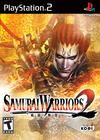 Samurai Warriors 2 for the PS2 continues Koei's franchise of Dynasty Warriors and Samurai Warriors games, and despite only marginal changes from the last edition, is probably the best game they've made yet.
The Dynasty Warriors series put the player in the role of a legendary warrior in the era of the Romance of the Three Kingdoms, and charged them with cutting a swathe across sprawling 3D battlefields packed with literally thousands of enemy soldiers. The Samurai Warriors series transposes this premise to feudal Japan. Samurai Warriors 2 loosely follows Japanese history from the rise of Nobunaga Oda through to the assumption of power by Ieyasu Tokugawa.
The game has some 26 playable characters, ranging from Nobunaga and Ieyasu through to master swordsman Musashi Miyamoto and ninja Hanzo Hattori. Each of these characters is significantly more... extreme... than history might indicate. Nobunaga, for example, apparently commands all manner of demonic magics. Kotaro Fuma can throw fireballs. Ieyasu Tokugawa carries an honest-to-god cannon around the battlefield, which seems to ignore all rules of recoil and reload times.
When you take these characters to the battlefield, you'll basically be turned loose on a vast army and left more or less free to decimate them as you see fit. Generally, you'll have an army of your own backing you up, with a general at the head who you have to protect or risk losing the battle. As you wander around slaughtering your foe, you'll hear the chatter of generals on both sides of the battle discussing their changing fortunes, ordering ambushes, taunting their rivals, and announcing charges and counter-charges. Generally, you'll want to pay attention to this chatter, as not only do you have the opportunity to become involved in their schemes by co-ordinating or thwarting their stragems, but it is in some cases fairly vital. You'll need to capture fortresses, defend cannon emplacements, prevent assassinations, escort spies, and achieve a whole bunch of other objectives.
These in-battle objectives have been tightened up a lot from previous games in the series. Firstly, they're greater in both number and variety than previously. There's usually at least two things you can be doing at any given time, which is great for two-player games as the second player will always have something meaningful to do. Secondly, they're more important. Where previously you could largely ignore the general chatter and just kill stuff, now you'll generally have to finish at least a couple of sub-goals in order to win a battle. This is a change for the better, as it lends each battle a distinctive character, breaks up the repetition, and gives the feeling that you're actually making strategic decisions which influence the course of the battle. And you're still largely free to do your own thing most of the time.
As you win battles, your character will level up in a variety of ways. This, too, is handled better than previous installments in the series. Firstly, levelling up is well matched to the progress of the plot, so you'll rarely need to repeat a level to gain XP - you can just play straight through. Your stats rise as you gain levels, which is a much better system than Dynasty Warriors, which saw you farming levels for rare stat-up items.
You'll also gain gold as you play, from defeating officers, accomplishing sub-goals, and just winning battles. Gold can be spent to buy new mounts, new bodyguards, upgrade your weapons, and most importantly to buy skills. Skills provide passive bonuses on the battlefield, including raising your basic stats, giving you increased effect from healing items, and strengthening your apocalyptic "True Musou" attack. Skills can also be randomly "stolen" from defeated enemy officers.
The game's Story Mode features a unique story for each character, detailing their place in Japanese history over five or six stages of battle. These are reasonably historically accurate, and you'll likely learn a fact or two as you play, although there's a decent amount of "what if" speculation for some of the minor characters or characters who died before achieving their dreams. Notably, there's been significant licence taken with the assassination of Nobunaga Oda.
There's also a Free Mode, letting you play any stage with any character, and a Survival Mode. Survival Mode challenges you to fight your way through 100 floors of a giant castle. Every five floors you have the opportunity to pick a mission, which will then play out over the next five floors. If you complete missions successfully, you earn bonus gold, and occasionally unlock new mounts, skills, or characters. It's a lot more fun than the Survival Modes of previous games in the franchise.
You can play Story Mode or Free mode co-operatively with a second player. Actually, the missions are so hectic you'll often feel like you need a second player just to stay in control of the fairly large battlefields. Two-player mode works in splitscreen, which involves some graphical compromises but is perfectly workable and a lot of fun. There's also a Monopoly-esque boardgame called Sugoroku which can be played with up to four players using a multi-tap. Sugoroku is fun, and worth a couple of tries, but is unlikely to hold your attention in the long term.
The main criticism levelled at the Dynasty and Samurai Warriors games is that they're repetitive, and that's an accusation fairly made. But, it could be said, Tetris is repetitive. It doesn't really matter that gameplay is repetitive when that gameplay is inherently entertaining. And, at least for me, going through battalions of soldiers like a hot knife through butter never gets old. No other game delivers an experience quite like Samurai Warriors, and it's an experience you'll either tire of in minutes, or be happy repeating for uncounted hours.
It's also true that Samurai Warriors 2 is effectively the same game as the original Samurai Warriors, and is very similar to pretty much all the Dynasty Warriors games. Like a sports franchise, Koei releases a new Warriors game every year with little more than a roster update and some new arenas. It may be the case that if you already have Samurai Warriors it's not worth your money to purchase the sequel. But on the other hand, Samurai Warriors 2 is a remarkably fun game, and for whatever reason the original Samurai Warriors was never released in Australia.
Graphically, Samurai Warriors looks good, but not great. The models are reasonably detailed, but some compromises have been made in order to depict the throngs of enemies that the game demands. The fog-of-war is still present and unfortunately close, but never really impinges on your awareness. The game overall looks about as good as Samurai Warriors or Dynasty Warriors 5. I'd love to see it on the XBox 360, as I can only assume the graphics are significantly better. Artistically, it's nothing special - less ugly than some of its ancestors, and sporting some great character design, but still plagued by some pretty bland battlefields and enemy troops.
The sound is similarly middle-of-the-road. Character voices are considerably better acted than the earlier games, but are still by no means particularly good. The best that can be said is that they're rarely irritating. The music combines traditional Japanese motifs with hard electric-guitar rock, and again is neither irritating nor memorable. The sound effects are probably the best part of the bag, with a great mix of screams, yells, horse hoofbeats, weapon swings, musket fires, and suchlike. They're still probably not going to win awards, though.
For my money, Samurai Warriors 2 is the best Warriors game yet. The level design is exemplary, with missions that are tight and focused without straight-jacketing the player. Levelling up is natural and free from the grind that plagued earlier versions. The character stories are strong, and the Japanese setting seems to suit the flavour of the game better than the Chinese one ever did. All in all, this is not only a must-have for existing fans of the series, but an ideal point to jump on board if you've never played a Warriors game before.
Monday, November 06, 2006
Sony's Dave Karraker vs Gamasutra
Sony's new senior director of corporate communications, Dave Karraker, is talking to Gamasutra. They really take a piece out of him, too, pretty much calling him a liar to his face a couple of times. It's worth reading for the following reasons:
(a) To count how many well-remembered games he name-checks in the opening paragraph.
(b) The admission that he was hired in part due to his strengths in "crisis communications".
(c) The first signs of a turnaround in the PS3, back to it being about gamers, not media consumers.
(d) He describes Ken Kutaragi's comments about the PS3 at TGS as "technically right", and as something that needs to be "interpreted".
All nice to hear. If he's not quite Sony's answer to the Regginator, he's a step in the right direction, and probably something they could do with a lot more of. Which is all by way of warming you up for the bombshell - probably the most important news for Australians:
GS: I know that the PS3 is essentially region free – will the downloadable content also be available worldwide, or region specific?Which is to say, the PS3 online marketplace will be subject to the same Gestapo-like censorship, epic localisation delays and inane release decisions which plague our storefront retail market. So that's another thing to not look forward to. I guess my hopes of playing a legal copy of Chrono Cross or the original Parasite Eve have just been rudely dashed once again.
DK: All of the online stores are region-specific, so that’ll dictate where you can download the games.
Back In Azeroth
Did I mention that I'm playing World of Warcraft again? I'm logging on when RL friends are on, and we're hoping to start a small guild down the track, so now's a great time to roll Horde on the underpopulated Oceanic server of Dath'Remar. My main's a troll priest called Skordi. If you know me in real life, or knew Ukulkos from Mortal Wombats on Khaz'goroth, or just read this blog, drop in and say hi some time.
But I'm not on anywhere near as much as I used to, because (a) I've done it all before, (b) addiction sucks, and (c) Marvel Ultimate Alliance calls to me in a sweet siren song.
But I'm not on anywhere near as much as I used to, because (a) I've done it all before, (b) addiction sucks, and (c) Marvel Ultimate Alliance calls to me in a sweet siren song.
Melbourne House Sells Out
Melbourne House got bought out by Krome Studios this week. I don't really know how I feel about that. On the one hand, Melbourne House were one of Australia's oldest development studios, and back in the early 80s they turned out some half-decent titles, including the text-adventure version of The Hobbit.
On the other hand, since at least the mid 90s, they've produced nothing but licensed C-grade crap. (Men In Black II: Alien Escape, anyone?)
Now they've been purchased by Brisbane based Krome Studios, whose crap is at least B-minus-grade. (Ty the Tasmanian Tiger.) Is this a good thing for Australian game development? Has Krome saved Melbourne House from a Gizmondo-like descent into embezzlement and car theft? Or are we witnessing yet another great Australian icon being brought down by the sting-rays of financial reality?
Full article here, via Gamespot.
Sunday, November 05, 2006
Tori Amos - Fade To Red
In a quick nod to one of my other fan addictions that I don't blog much about, I'd just like to say that I'm extremely happy to have acquired a copy of Fade To Red - The Tori Amos Video Collection. It claims to contain all the Tori videoclips from 1992 to 2005, which is just a plain lie, as the following clip isn't on the DVD.
Tori Amos - Strange Little Girl - from the album "Strange Little Girls", which (awesome cover photography and Neil Gaiman quotes notwithstanding) I still think is the "bad album". For the record, Glory of the 80s also seems to be missing, but it looks like the rest of the clips have made it.
Tori Amos - Strange Little Girl - from the album "Strange Little Girls", which (awesome cover photography and Neil Gaiman quotes notwithstanding) I still think is the "bad album". For the record, Glory of the 80s also seems to be missing, but it looks like the rest of the clips have made it.
The Devil Wears Prada
The Devil Wears Prada isn't the sort of film I'd normally see, inasmuch as it's a female-oriented comedy-drama about fashion. The reason I did is largely because of the trailer.
Where most movies of this sort attempt to sell themselves as "oddball heartwarmers" with trailers composed of snippets of clever dialogue and goofy situations, The Devil Wears Prada took a different path. Its trailer comprised the entire first scene of the movie. I was so impressed by the honesty and respect for the audience shown by the trailer that I decided on the spot that I had to see the movie.
I'm glad I did. Anne Hathaway plays a talented but allegedly unglamorous student journalist looking to find work with a major news publication. To this end, she takes a job as an assistant to a venomous fashion editor (played by Meryl Streep) for the resume benefits the position will bring. She soon finds herself making unpleasant decisions and life changes, which eventually force her to choose between her personal life and her career.
It's a story that's been done to death, but The Devil Wears Prada executes it professionally and entertainingly. Once you swallow the film's initial assertion that it's possible for Anne Hathaway to look un-glamorous or overweight in any costume whatsoever, the film is well written, excellently performed, and never insults your intelligence.
Meryl Streep steals the show as the uncompromising Miranda Priestly, editor-in-chief of the fictitious Runway magazine, who a friend assures me is modeled on real life Vogue editor Anna Wintour. Yet despite the over-the-top nature of Streep's character, the film resolutely avoids making use of either caricature or stereotype. It also is reluctant to relinquish the narrative to Streep, and stays clearly focused on Hathaway's character.
Hathaway delivers a comptent performance, but will be mostly remembered for looking gorgeous in a ridiculously large selection of designer outfits and hairstyles. Stanley Tucci supports ably as the catty but lovable Nigel. I'm also told that there's a large number of cameos from fashion industry personalities, if you're able to appreciate that sort of thing.
The Devil Wears Prada manages to transcend its marketing as a "chick flick" and become simply quality entertainment for any audience. I'm happy to recommend it to anyone.
More Of The Same
How is it that I can be thoroughly enjoying Samurai Warriors 2, the seventh functionally identical installment in that franchise that I've played, and yet the release of Vice City Stories for the PSP just has me sighing and saying, "I guess I'll play it, some day"?
I just feel tired of the Grand Theft Auto formula. The often tortured plotlines, the implausible characters, the occasional frustratingly difficult missions that just make me want to throw my PS2 or PSP out a window. It's not doing it for me any more. Vice City Stories will probably end up being the fifth time I've completed an ambulance R3 mission, and I can sense already that it'll have some idiotic and nigh-on impossible motorcycle checkpoint stunt challenge.
There's only so many times I can build a bloated criminal empire, Rockstar. Can't you give me something new?
I have Bully aka Canis Canem Edit aka Grand Theft Schoolyard sitting by my TV waiting for me to play it, and it's good and all, I suppose. The main character looks and acts like an asshat, which is a turn off. I'm fundamentally left feeling that I've already done four years in a private school, and I'm not really sure I want to go back under the guise of gaming. Plus, that whole "jocks vs nerds vs greasers vs rich kids" thing has been done to death. Watching The Breakfast Club only takes a couple of hours, and it has Molly Ringwald and Judd Nelson in it.
Lego Star Wars II is next on my gaming list after Samurai Warriors. Maybe it'll set me straight.
Saturday, November 04, 2006
Children of Men
Children of Men may be based on the book of the same name by P D James, but it nevertheless could have gotten a lot of benefit from a more appropriate title.
The movie posits a world of the near future, where for unexplained reasons the entire human race has fallen simultaneously sterile. No children have been born for 19 years. Torn by rioting, terrorism, suicide, religious extremism and war, most of the rest of the world has fallen into chaos. Britain, however, continues on. Refugees flooding to Britain's shores are locked in Auschwitz-like concentration camps, and extremist groups of various persuasions are poised on the brink of civil insurrection.
Clive Owen plays a government worker who is thrown into the midst of this chaos when he is approached by his ex-wife (now wanted by the government) to ferry a refugee woman called Kee from London to the coast to meet with a secret scientific organisation known as the Human Project. What begins as a simple plan rapidly spins out of control, as Kee is pregnant with the first child since the disaster, and is being hunted by both the government and a violent pro-refugee group called the Fish.
Don't let the babies-and-sterility plotline fool you. This is not a movie about babies. It is a movie about immigration. It's a story about a future that is scarily near at hand, particularly for Australians, where immigration pressure is ramped up by an exponential level, and the government responds with exponentially more extreme policies. It's a future that could happen, and if there's one element where the film doesn't ring true, it's that the film's setting of the year 2027 isn't close enough.
Children of Men is directed by Alfonso Cuaron (Y Tu Mama Tambien, Harry Potter and the Prisoner of Azkaban), and you can't help but be struck by exactly how good a job he has done. The film employs a level of visual storytelling approaching genius. It uses few quick cuts, instead preferring to let the often violent and disturbing themes of the movie be played out by the movement of actors and objects through the field of vision of the camera. Mini-stories are told through the view out a bus window, from a car windshield, or the view from a fourth-story apartment. A great many single-take extended camera movements are used.
Cuaron also has an aptitude for transforming the magical into the mundane, and the mundane into the magical. Using the same skill with which he made the grounds of Hogwarts feel at once a fantasy land, and yet part of the English countryside, in Children of Men he blends the politics and technology of a near future Britain seamlessly into our present-day memories and expectations. Much of the film feels less like a staged production than it does modern-day newsreel footage.
Children of Men is a visually engaging, powerful, and thought provoking movie. It's probably the best science fiction movie of the year (although sadly it doesn't have much competition) and it absolutely deserves to be seen on the big screen. If you haven't already been, go now, while it's still showing.
Friday, November 03, 2006
Dynasty Warriors BB (No Luck)
By the way, last week I tried that Dynasty Warriors BB demo that I got given at Tokyo Game Show. It installed fine, and I got treated to some very nice cinematics of assorted Chinese-esque warriors going toe to toe with series mascot Lu Bu. And then I got to the point where I'd have to log in, and realised that unfortunately the game only works for subscribers to one of Japan's BB networks (hence the name), such as Yahoo! BB.
As I understand it, what differentiates the BB networks from other broadband service providers is that they go at a speed of about 12 megabits per second, which is an order of magnitude faster than most of the rest of the world gets. I'm unsure if Dynasty Warriors BB actually needs all that crazy speed, or whether it's just some sort of exclusivity deal, but in any case it's off-limits to us gaijin for the time being. Sigh.
For those who don't know, Dynasty Warriors BB is a PC-based massively multiplayer installment of Koei's successful console franchise, which sees players controlling single exemplary warriors on large semi-historical battlefields. The player is the proverbial "one warrior worth a thousand", and has the ability to go through literally thousands of enemies like a hot knife through butter.
Gauntlet: Dark Legacy Post-Mortem
 I've previously alluded to exactly how rubbish the GameCube version of Gauntlet: Dark Legacy is, but today I'm going to spell out the problems in particular detail.
The lack of effort involved in the creation of Gauntlet: Dark Legacy is a story in and of itself. The game is a GameCube port of the PlayStation 2 expansion of the Dreamcast port of the PlayStation 1 port of the 1998 arcade machine Gauntlet Legends. That makes it, as of this writing, effectively an eight-year old game, and four years old when it was released for the Cube in 2002.
Dark Legacy allegedly contains all the original content of the PlayStation version of this game, plus new material including new levels and character classes. If you loved Gauntlet Legends, goes the logic, then Dark Legacy will be even better.
The logic is bad for a couple of reasons. Firstly, no one loved Gauntlet Legends. While the arcade machine was a decent way to lose a few dollars, it was never a particularly wonderful game, and its booming announcer voices and chunky but brightly-coloured graphics didn't look quite so novel when brought to the home console.
Secondly, almost all of the allegedly "new" material in Dark Legacy is available as bonus unlockables in the Dreamcast version of Legends. Admittedly Dreamcasts are now in the realm of collector pieces and aren't exactly a viable platform to get your daily gaming on, but still, it's a bit rich to slap a new name on the game and suggest it has something that previous versions didn't. Only Hideo Kojima can get away with that kind of tomfoolery.
Thirdly, the GameCube version of Dark Legacy is visually unappealing, has poor controls, a poor interface, is repetitive, sounds awful, is unchallenging, and is riddled with game-crashing bugs.
The gameplay follows the standard for the Gauntlet series. Between one and four players pick from a variety of theoretically different classes, and then begin to proceed through a series of mazes. Along the way they'll defeat monsters, flip switches, unlock gates, and pillage treasure chests. Every so often, there's a boss monster. And that's really all there is to it.
There's a fairly large range of classes available to choose from, including Jesters, Knights, Archers and Dwarves and the old stalwarts of Valkyrie, Warrior and Wizard. There's also a bucketload of extra classes to unlock as you progress through the game. Inexplicably, though, the original game's Elf is nowhere to be seen. In any case, it won't worry you, as all of the classes are for most intents and purposes identical. They play pretty much the same, which is to say you move around and spam the attack button and pretty much ignore the remainder of the special attacks and magics the characters theoretically possess.
There's a plot of sorts, in which some land somewhere is overrun by a generic evil with the appropriately menacing name of Skorne. You're tasked with finding a bunch of shards, and a bunch of runestones, which will unlock the doorway to Wherever, which you can pass through to Defeat Evil in some fasion. The shards are easy enough, as you get one from each boss, but the runestones are a little trickier, as they're hidden in some (but not all) of the ordinary levels. Missing one will mean you need to repeat the level to look for it again, prompting cries of pain and occasionally the consumption of strychnine.
As you journey you'll come across many incredibly varied items, which allow you to do things ranging from breathing fire to transforming into a chicken. Upon finding these items, you'll promptly completely ignore them and never use them, because activating them requires using an asinine control scheme involving the D-pad and involves standing still while enemies are hitting you to scroll through an unordered list of the hundreds of items you have, displayed one at a time at the bottom of the screen. Which is a shame, as those items could have really broken up the monotony of the experience.
The main problem with the game is the core gameplay is unappealing and shallow. Monsters spawn endlessly from monster-generator-things, and you have to use your ranged attack (which all characters have) to kill them off in such numbers that you can shut down the generators. Then you move forward through the maze, and repeat the process. Both monsters and characters make horrible ear-rending sounds in response to the flow of battle, and despite the allegedly large variety of monsters in the game, they all play pretty much identically. There's chests around to be opened, but they mostly contain those items that you weren't going to use anyway, so they're largely an optional feature.
Every few levels you'll get a boss fight. These are far and away the best bits of the game, largely because (a) they occasionally require a small amount of strategy, and (b) you don't have to move forward, open chests, or unlock gates. Seeing as bosses also reward you with the most XP and treasure, you'll likely find yourself repeating these sections a number of times to level up before progressing.
I'd like to say that sharing this experience with three friends makes the game a lot of fun, but that would be a lie. It makes the game bearable, and even that is mostly because you can have a conversation while playing to take your mind off the gameplay.
Speaking of playing with friends, you'll soon be frustrated by the save process. There's no autosave - you have to do it manually, after each level. What's more, you have to save for each character individually. Player 1 saves, then Player 2, et cetera. And it's not a quick process. It goes up there with Ico and Dead Rising as one of the most bizarrely bad save systems I've ever encountered in a game.
The game isn't hard, by the way. Sure, you'll lose a lot of health, and you don't always have enough money to buy it all back, but there's plenty of cheap cash available just by repeatedly thwarting the first boss, so at worst you'll have to repeat some levels. In any case, getting hurt never feels like a punishment for bad play so much as it resembles something that happens regularly, randomly and unavoidably.
I've mentioned that the game looks awful. This isn't just a matter of it being technologically dated. It's that the game has no art in its soul. It has visual design that feels like it was created by particularly unimaginative programmers. Levels are mostly picked out in grungy shades of brown and green, with confusing layouts. Important items or enemies are often concealed by the terrain, and it's easy to get lost as one area looks pretty much like another.
The sound is similarly hideous, especially in the voice work for the characters, who are prone to shouting camp one-liners whenever they acquire treasure, eat food, or generally just feel like being a jerk. Special effort has been gone to in order to make all the women sound like particularly cheap hookers, which probably deserves some kind of award. The monsters likewise make a variety of sounds, mostly derived from the "fingernails on blackboard" school of sound design. Some enemies have death-squeals so ear-gougingly painful that you'll find yourself going out of your way to NOT kill them.
My friends and I finished Dark Legacy as an exercise in masochism, but to everyone else out there, don't play this game. You'll regret it. The only value it holds whatsoever is as a case study of how not to make a video game. It does almost everything wrong that can be done, with a kind of flatulent gusto that will make you want to murder Midway employees, screaming, "Hah! Who needs food badly NOW, bitch?"
Wednesday, November 01, 2006
Quick Thoughts
Can I just say how happy I am that the Wii virtual console launch lineup will include Toejam & Earl? Possibly the greatest two-player co-operative game ever made? I am so going to be bugging everyone who knows me in Canberra to play this with me. Who knows, it might even be playable over the interweb in some fashion. Although it's $8 US, maybe $12 AUD, which is a little steeper than might have been ideal for such a dated game.
Also, I got shanghaied into seeing Children of Men last night, so that's no longer happening tomorrow. (There wasn't much interest in that one in any case.) But the rest of the Good Movie Thursday schedule is still intact. Review of Children of Men forthcoming. Short version - it's bloody brilliant.
Also, I got shanghaied into seeing Children of Men last night, so that's no longer happening tomorrow. (There wasn't much interest in that one in any case.) But the rest of the Good Movie Thursday schedule is still intact. Review of Children of Men forthcoming. Short version - it's bloody brilliant.
Monday, October 30, 2006
Good Movie Thursday
I'm resurrecting Bad Movie Thursday, which is to say I'm seeing a movie every Thursday for the next few weeks, and other people can come along or not. The catch is, there's actually some quality cinema hitting Australian screens over the next month, so I guess that makes it Good Movie Thursday, which doesn't quite have the same ring to it. The schedule is as follows:
2 November: Children of Men
Directed by Alfonso Cuaron, well known for creating a selection of successful arthouse movies, and also the good Harry Potter film (Prisoner of Azkaban). In the future, women can't have babies, and the world is doomed, until a woman has a baby anyway. The clever, I understand, is in the execution more than the concept.
9 November: The Wrong Man
A.K.A Lucky Number Slevin in the US, this crime film tries to cast itself into the subgenre created by films such as Lock Stock and Snatch, hopefully with more success than the truly awful Crank. Josh Hartnett, Lucy Liu, Bruce Willis and Morgan Freeman star.
16 November: The Prestige
Vaudeville era stage magic forms the background to a suspenseful-looking film from Christopher Nolan, director of Memento and Batman Begins. Christian Bale, Michael Caine, Hugh Jackman and David Bowie star. Also Scarlett Johansson, but don't hold that agains the film.
23 November: The Descent
Girls in a cave, with evil, wahey. Horrortastic.
30 November: A Scanner Darkly
FINALLY! Australia gets to see Richard Linklater's rotoscoped adaptation of Phillip K Dick's semi-autobiographical near-future drug odyssey.
Cheap tickets will be the go: $11 if we get a small group, and maybe less if there's a lot of interest. All movies seen at Belconnen Hoyts.
Also, while I realise the above is a fairly heavy slate of movies, I'm also up for seeing The Grudge 2 (showing now) if anyone is interested.
Sunday, October 29, 2006
Make Your Own Seal Web Toy
Make your own seal using this site. Here's one I prepared earlier.

By the way, if you're one of the half dozen people in the world who understands what this is a reference to, and would like it on a plain black T-shirt for $35 or a ladies' fit T for $55, then leave a comment or in some way contact me.

By the way, if you're one of the half dozen people in the world who understands what this is a reference to, and would like it on a plain black T-shirt for $35 or a ladies' fit T for $55, then leave a comment or in some way contact me.
Saturday, October 28, 2006
Metal Gear Diamond
If you've come here from a search - it's not a new Metal Gear game. Go home.
What it is is a tabletop RPG I'm running Monday for a couple of friends. Inspired largely by the crapness of Metal Gear Acid and its sequel, and by how much they missed the point of what made Metal Gear good, I've put together a non-continuity Metal Gear plot to run over maybe a couple of sessions.
We're using a modified version of the 7th Sea system, largely chosen because of how well it handles boss-level fights. The game's set in the Carribean, and will feature:
* a new Metal Gear
* a cadre of eccentrically-named mercenary villans
* political and scientific themes "ripped from today's headlines"
* buckets of detailed information available to players via Codec
* authentic native flora, fauna, and regional history
* a well-characterised and diverse specialist support team
* a fight against a big frikkin' aircraft
* a score by Harry Gregson-Williams (thanks to the PS2 original game soundtracks)
* Solid Snake
Is anyone reading interested in hearing how this does or does not work? It's the first time that I've tried an RPG in a non-RPG world and felt like it might actually be justified.
Friday, October 27, 2006
The Invisible Gamer
Via New Game Plus:
Strange Horizons are offering an intelligent and well written piece on being a girl who plays games. It's an article which rings as true as is possible considering I don't have breasts. It deals not just with the videogaming world but also with joining male-dominate roleplaying clubs. Definitely a must read, particularly for my female readers - both of you!
One of these days I'll stop re-processing the best of other people's content, I swear.
Strange Horizons are offering an intelligent and well written piece on being a girl who plays games. It's an article which rings as true as is possible considering I don't have breasts. It deals not just with the videogaming world but also with joining male-dominate roleplaying clubs. Definitely a must read, particularly for my female readers - both of you!
Sometimes girls are told that they can't or shouldn't play RPGs or video games. But more often, I think, they are told that they don't. The cultural message is sometimes wrapped in hand-wringing and good intentions, but the underlying assumption beneath "Why don't girls play video games?" is still "Girls don't play video games." Technology in general, but game technology in particular, is viewed as a masculine domain. Girls use computers to word process, send instant messages, make a MySpace profile—but they don't use them to slay dragons. They just don't. And it's a lot harder to see what's wrong with that argument than a straightforward claim that slaying dragons is not ladylike.Real Girls Don't: The Invisible Minority of Female Video Game Players
One of these days I'll stop re-processing the best of other people's content, I swear.
Perplex City Expanding
Via Gamasutra:
EDIT: I should also add it's a mark of both coolness and games-industry foresight that Gamasutra are covering this news. They definitely seem to have a keen eye for where video gaming is going. Kudos, or somesuch.
So for all those people who'd been hanging out to see whether Perplex City had been commercially successful, this seems like a pretty clear indication that the long term answer is "yes". ARGs are finally entering the hallowed ranks of "things which are profitable". Huzzah.Officials from Mind Candy, the UK based company behind the alternate reality game Perplex City, have announced a $7 million dollar investment from Accel Partners and existing investors Index Ventures and NewMedia Spark, preceding a major 2007 expansion of the ARG, including a second new puzzle brand aimed at a younger audience. 2007 will also see a wide-range of new Perplex City products including books, video games and mobile content. Bruce Golden, general partner at Accel Partners said, “We believe that Mind Candy is a pioneer in developing new forms of entertainment that combine some of the best attributes of the internet with the strengths of traditional board games, puzzles, and treasure hunts. Mind Candy’s initial success at establishing a passionate community of participants in Perplex City,
combined with their ambitious plans to build a global brand for consumers interested in this new form of entertainment represents a very exciting investment opportunity for us.
- see the original article
EDIT: I should also add it's a mark of both coolness and games-industry foresight that Gamasutra are covering this news. They definitely seem to have a keen eye for where video gaming is going. Kudos, or somesuch.
Yunyu: Lenore's Song on Rage
I've just received an email that Lenore's Song by Yunyu is being featured on the Australian Broadcasting Corporation's Rage tonight. (Check out the official website announcement.) If you don't know what I'm talking about, take a look at the clip below:
Rage runs from just before midnight on Friday nights to 9 am Saturday on the ABC.
Rage runs from just before midnight on Friday nights to 9 am Saturday on the ABC.
Thursday, October 26, 2006
Disgaea: Hour of Darkness Post-Mortem
 As anyone who's played World of Warcraft can attest, a sufficiently satisfying system of levelling up can make a game playable even in the absence of plot, depth of gameplay, or stimulating action.
Disgaea: Hour of Darkness for the PlayStation 2 takes this concept and runs with it about as far as it's possible to run. And then it goes back and adds in the plot and depth of gameplay anyway, just for kicks.
In Disgaea you'll find yourself taking on the role of Laharl, a spoiled young demon brat. Laharl's the son of King Krichevskoy, Overlord of the Netherworld. For initially unexplained reasons, Laharl's been asleep for a little over two years, and when he wakes up he discovers his dad's dead, the various demon lords are all vying for the title of Overlord, and pretty much everyone's forgotten that Laharl exists.
Naturally this situation won't do, and Laharl proceeds to mobilise his vassals, including the backtalking demon wench Etna, and a squad of demon-penguin-thing Prinnies. Together they set out to take back the Netherworld and install Laharl as its ruler.
Of course, things get complicated along the way. Laharl and Etna get mixed up with a ditzy angel named Flonne, a bunch of humans, and a world-spanning plot of conquest, and what begins as internal squabbles in the Netherworld soon threatens to spill over into both Earth and the heaven-like Celestia.
The way all this plot works out as gameplay is via a series of turn-based strategy battles. You deploy up to nine characters into a map, and then proceed to mix it up with a bunch of enemies, until only one side is left standing. It's fairly routine turn-based strategy fare, but with a bunch of tweaks which make this one of the best in the genre.
Some of the tweaks are little things. The notoriously slow pace of most turn-based strategy games is notably faster here, thanks to enemies which all move at the same time, and a well-tuned user interface.
You have the ability to lift and throw both allies and enemies, which makes for some interesting tactical options. Also, some maps are littered with "geosymbols", which bestow bonuses or penalties for standing on certain squares. Geosymbols can be moved and destroyed, and when destroyed they cause explosive chain reactions throughout the level which can be manipulated to create huge combos and destroy many enemies.
The real genius of Disgaea, though, happens between levels, and it's mostly in the levelling up. Each and every character in the game can level up to level 9999. You'll only need to get to about 80 to complete the main plot, though. But the game doesn't stop at the main plot. There are additional challenges, up to and including a final bonus boss which you'll need at least level 6000 to take on.
It's not just the characters that level up. Each skill you learn can level up with practice. Higher level skills do more damage or strike a larger area of effect. Each item, weapon, or armour can also be levelled up to level 100, increasing its stats. You level weapons by entering an "item world", which is a randomly generated dungeon of a difficulty matching the quality of the weapon. Each level conquered raises your weapon by 1.
Within the item worlds you'll find "specialists", which are specific monsters you can kill. Killing a specialist grants a further bonus to a item, and subdued specialists can be moved from one item to another and stacked on top of each other.
To make things even more complex, characters can assume one of a number of jobs, ranging from various varieties of magic user to archers, samurai, and ninjas. The jobs themselves level up with practice. Characters have the option to "transmigrate" to a new class or an improved version of their existing class. This involves starting over at level 1, but retaining the skills the character already knows, and gaining a faster rate of stat gain based on how strong the character was before transmigrating.
Mixed in with all this is the Dark Assembly, a kind of Parliament of Hell. Here you can propose bills for the Assembly to pass, which can have the effect of making higher quality gear available at the shop, raising or lowering the level (at XP benefit) of enemies, improving a character's abilities, or opening additional bonus maps. Getting the Assembly to pass your bill will require bribing senators with items, or alternatively laying the smack down on any senator who dares to vote against you.
The Dark Assembly can also give you the ability to create new characters. Characters created in this fashion become the "pupil" of an existing character. Characters mentoring a pupil have the opportunity to learn skills obtained by the pupil, meaning you'll likely set up some long mentor/pupil chains in order to equip the majority of your characters with offensive and healing magic.
The sum of all this makes for a fantastically addictive experience. You'll be creating hordes of characters, levelling them, trading skills between characters, improving items, and transmigrating. The game does a good job of making every increase in power feel meaningful, and setting worthwhile challenges so that all that levelling doesn't go to waste.
The basic gameplay is very solid, and becomes moreso once you master the complexities of the metagame. The plot itself is very funny, lighthearted, and entertaining, with some over-the-top but well delivered voice acting for the main characters. The game has a variety of alternative endings, and you can carry over your characters into new games complete with their levels, skills, and items, so there's plenty of replay value. You can easily spend a good 80 hours just making your way through this game the first time, and a good deal more on subsequent trips.
The graphics are fairly basic, mostly consisting of sprites, and probably could have been rendered on a GameBoy Advance. But they're still not hard on the eyes, and are totally appropriate given the setting and gameplay. The sound is nothing particularly noteworthy; as mentioned, the voice acting is good, both in the plot scenes and in the various shouts and cries your characters utter in battle. The music is sufficiently interesting to not having you tearing out your hair after 80 hours, but otherwise not particularly memorable. The sound effects are a satisfyingly beefy mix of spell effects, explosions, and weapon-connecting noises, and are all par for the course in this sort of game.
It's really quite hard to pick faults in this game. The most obvious thing to say is that if turn-based strategy and levelling up are just fundamentally not your thing then Disgaea really has nothing to offer you. It doesn't make any pretensions at trying to reach a large audience - it's focused tightly on its core mechanics and sticks to them. You won't find minigames, social play, or a lot of cosmetic customisation going on, let alone meaningful choices in how the plot plays out. Disgaea is about levelling up and killing things, and that's all.
Also, Disgaea suffers from the bane of the Final Fantasy series, in that a lot of the high level attacks and spells have annoyingly long animations. Often you'll be able to put down the controller and have a sip of your drink while waiting for your characters to finish their absurdly lengthy action sequences. If you've been able to stomach this in other roleplaying games, then you won't have a problem here, as Disgaea's aren't quite so bad as the worst offenders in the genre.
These issues aside, there's really not a lot wrong with Disgaea. It's an almost perfect example of the sort of game that it's trying to be, and it's hard to criticise without criticising the genre generally. It's likely from this post that you've already got a fair idea whether this is intrinsically the sort of game you hate, and if it isn't, then you owe it to yourself to play.
Disgaea is quite hard to get now in a lot of countries. To the best of my knowledge it was never even released in Australia. I have a UK import copy, which I understand is rare even in the UK. I'm not sure what the situation is in the US, but seeing as the sequel has recently come out over there I'm hopeful that the game's more common. In any case, if you see a copy, get it, as you may not get another chance.
Crank
[Now Experiencing] [Film]
Crank is a bad, bad movie. It is what happens when films have incestuous sex and give birth to horrible little deformed babies. It should not, under any circumstances, be watched.
The premise is good. It could have been a fun movie. A man (who turns out to be a hired killer) wakes up to find that bad guys have been in his house and injected him with a lethal poision. The only way to stay alive is through the constant, uninterrupted production of adrenaline. So he has to be constantly producing adrenaline until he finds the bad guys, works things out with his girlfriend, and generally has a hell of a last day on Earth.
I said the premise was good, not the science behind it.
Crank has Jason Statham in it, who, it must be said, gives the best performance possible given the script and the directing. But if you've seen his ugly mug gracing the promotional material and naively hoped you might be in for more in the vein of Lock, Stock and Two Smoking Barrels or Snatch, then you're about to be horribly and intimately violated.
Speaking of which, it seems the writer probably had a bit of a brainstorm during the creative process, and said to himself, "You know what's really sidesplittingly funny? Rape. I'll do a slapstick rape scene." Don't worry, folks - she consents eventually!
The film's almost so bad it's good, in the grand tradition of Snakes on a Plane. Almost. But it's not. It's just bad. So bad it's bad. It does a whole bunch of things which in more able hands might have been edgy or funny, but which just come off as lame and cringeworthy. The script has an immature, unpolished feel which leaves you seriously wondering whether it may have been written by a 14 year old. The movie as a whole is structured as though it's a one-act short film, cruelly stretched to feature length by use of some kind of medieval torture device.
Avoid it. Oh sweet Jeebers, do not see this film.
Tuesday, October 24, 2006
PS3 Backwards Compatibility
[News] [Computer Gaming]
So the PS3 isn't region free as far as backwards compatibility goes, it seems.
In the context of an article about Sony prosecuting companies illegally importing Sony products into the European Union, the following tidbit slipped out:
Or, y'know, we can just keep hoping that this statement came from a marketing guy with no idea what he's talking about.
So the PS3 isn't region free as far as backwards compatibility goes, it seems.
In the context of an article about Sony prosecuting companies illegally importing Sony products into the European Union, the following tidbit slipped out:
The company explained the reasoning behind this policy as trying to "protect" European consumers "from being sold hardware that does not conform to strict EU or UK consumer safety standards (due to voltage supply differences etc.), is not (in PS3's case) backwards compatible with either PS1 or PS2 software, will not play European Blu-ray movies or DVDs, and will not be covered by warranty."Well, that just sucks. So here I am with my plans for importing all those PS1 RPGs that never made it to Australia scuttled. It seems kind of... stupid. Looks like the mod chip market won't be dieing out after all.
- via Gamespot (emphasis added)
Or, y'know, we can just keep hoping that this statement came from a marketing guy with no idea what he's talking about.
Sunday, October 22, 2006
Sony's Online "Strategy"
[News] [Computer Gaming]
It's looking like another week of media disasters for Sony. News not only that replacing the batteries inside your PS3 controllers will require returning them to the factory, but also that Sony's online service looks uninspired and uninteresting.
First up, Sony aren't going to be implementing anything like Microsoft's incredibly successful XBox 360 Gamerscores. Sony have reported an intention to have no system for tracking accomplishments over multiple games. Some games may have game-specific achievements or high score tables but these will be up to the developers/publishers to implement and maintain.
I absolutely loved the Gamerscore system, and more than once it's almost motivated me to buy into the whole XBox milieu. It's been one of the most inspired ideas of this generation of consoles and I can't for the life of me understand why Sony wouldn't jump on this particular bandwagon. It's certainly not as if they're worried about being original this time around, what with their controller and all.
Speaking of which, Microsoft's Aaron Greenberg has been quick to jump in and brand the entire Sony online initiative as:
(a) basically the same thing that Sony did for the PS2, and
(b) a knockoff of XBox Live.
I'm not sure that those can both be true at the same time, but whatever.
Most of the news currently surfacing around the Sony online strategy comes from a recent press conference. Definitely the scene stealer at that event was the news that the first 500,000 PS3s would come with a copy of Talladega Nights on Blu-Ray, but amidst that show-stopping revelation were a few bits and pieces of substance.
It seems the PS3 will be having none of this "points" nonsense when it comes to their marketplace. Purchase prices will be in real dollars and cents, so you can get a good appreciation of exactly how overpriced Oblivion horse armour really is.
Downloadable games will be priced at "under" $14.99 US, which is to say that it's probably still cheaper to buy real games second-hand than to use the download service. Some of those games, though, will apparently be made by the likes of God of War developer David Jaffe, so there's probably going to be some pearls in amongst the swine. There'll also be original PlayStation games of the likes of MediEvil and Syphon Filter - one can hope there'll be some really good games in there, too.
Developers can also build the online store directly into games, so that you can buy stuff from within the game user interface. No real word on whether that's going to require an intrusive standardised format much like the PSP save game mechanism, or whether we'll have the store system working completely differently from game to game.
Whatever you do choose to download from the Sony marketplace, you can download to up to five other PS3s without paying additional money. I'm not sure if these downloads will have some sort of lockout so you can only actually play one at a time, but if not I suspect that if I end up with a PS3 I'm going to end up giving five of my friends a bunch of free stuff.
You can also then access what you've downloaded to your PS3 via your PSP (assuming you have one). I'm assuming this is going to occur wirelessly in some fashion. I'm hoping that this isn't the only way for PSP owners to obtain the much touted original PlayStation games for portable play, but with Sony as it is I wouldn't be surprised.
You can also apparently hook up a keyboard to your PS3, to which I can only say thank Jeebers, as the console's internet functionality would otherwise be a tad shallow. No real word on how well this might be supported in games, particularly online ones, but if I know Sony I strongly suspect the answer is "this will be up to the individual developers".
Anyway, it basically boils down to the fact that Sony doesn't seem to have learned anything whatsoever from Microsoft's online success with the XBox 360. There's no real leadership emerging in terms of creating an integrated, well-supported marketplace, and the focus really seems to be more on pushing Sony's film and media agenda than it does on making something that will draw in and hook consumers.
All in all, if you've experienced the wonders of using your PSP as a media center and internet browser, then I think it's safe to say you've already had a taste of what to look forward to with the PS3. You poor suckers.
Saturday, October 21, 2006
Attack of the Killer Swarm
 [Now Experiencing] [Computer Gaming]
A certain Mr Juffles of LiveJournal non-fame directed me recently towards the Experimental Gameplay Project. This suggestion was followed by some unsubtle prompting to visit said site, by Matt over at Internal Collapse.
So, fine. I've gone and checked it out. It's good, and all. I guess. The result of my trawling of this mesmerising cesspit of gaming is that I am able to strongly urge you all to go and play Attack of the Killer Swarm. It's about 5 meg in size, it's easy, and it's very, very memorable.
154.0 max velocity. Beat that, bitches.
.kkrieger
 [Now Experiencing] [Computer Gaming]
On the topic of "things the whole world already knows about except me", I present .kkrieger, a procedurally generated first person shooter. The graphics and gameplay are at about the level of (and in some cases are nearly indistinguishable from) the early Quake games. I'm talking large level layouts, detailed texturing, fully 3D enemy models, the works.
The total file size of the game is 96k.
Which is to say, if you take a screenshot of the game while playing it, the image file of the screenshot will be larger than the game.
It's all done through the magic of procedurally generated content. The graphics are stored not as image data, but as algorithms that produce image data.
Check it out - The Dust Forms Words commands you!
Osu! Tatake! Ouendan! Post-Mortem
 "Ready! Fight! Cheer Squad!"
These words are the anthem of a squad of elite Japanese male cheerleaders, and, curiously enough, they're also a rough translation of the title of Osu! Tatake! Ouendan!
Ouendan is a Japanese-language rhythm game for the DS. It's unfortunately not coming out in the West in its current form. Although a localisation called Elite Beat Agents is planned, if you want the original craziness you'll have to do like I did and get yourself a Japanese copy to play in your wonderfully region-free handheld.
The game text is in Japanese, but that won't really bother you. The menus are intuitive, so that you'll usually be able to figure out what's what without understanding a single kanji, and the story (such as it is) is illustrated by animated manga comics which clearly spell out what's going on in a humorous and charming manner.
For Ouendan, you'll be taking the role of a squad of black-trenchcoated male cheerleaders, on a quest to generally make the world a better place. You'll be employing your elite cheerleading talents to a variety of unlikely problems. Some are prosaic, such as helping an embattled student to concentrate on his studies, or inspiring a struggling secretary to photocopy and answer the phone at superhuman speeds so she can win the heart of her spunky boss. The majority, though, are fairly off the wall, and you'll soon find yourself cheering on the police as they fight an alien invasion, urging a horse to chase down a motorcyle-mounted bandit, and reuniting a ghost with his still-living girlfriend.
The gameplay is easy to learn, and tricky to master. Each level consists of a scenario, which is accompanied by a catchy piece of J-pop music. As the music plays, the top screen of the DS displays animations showing you the progress of whoever you're cheering on. The bottom screen displays a series of coloured, numbered circles. Each circle has a thin outline, which starts large, and closes in until it is the same size as the circle. Your job is to tap each circle with the stylus just as the outline matches the circlce - a process which coincides with the rhythm of the music. Misses will take chunks out of a life bar shown onscreen, whereas particularly well-timed taps will refill it. The objective is to make it to the end of the song without your bar running out.
Like most rhythm games, it's fun, it's addictive, and any given attempt at a level takes no more than a couple of minutes, so naturally the game is perfectly suited to the DS. The difficulty starts off exactly right, but ramps up fairly quickly. Finishing the last level of Normal mode is a task I still haven't mastered, let alone the Hard and Insane difficulties that follow.
The greatest failing of the game is the small number of songs available. Games like Dance Dance Revolution and Guitar Hero have set the bar for the genre at the level of 30 to 40 different songs per game. Ouendan has a mere 15. Theoretically the songs can be attempted on each of four different difficulty settings, but you have to complete the entire game on Normal mode before Hard becomes available, and complete all of Hard to get Insane, so there's not a lot of variety straight off the bat.
Despite the relative lack of content, Ouendan remains a charming and memorable game, and I'm really glad I got a copy while I was in Japan. It's one of the most instantly fun games I've yet played on the DS, and is recommended to just about anyone who owns the system.
Thursday, October 19, 2006
Sam & Max & Suchlike
[Computer Gaming]
Now that I've seen a review (thanks, Gamespot) I'm quite happy to say that I would like to play Telltale's new Sam & Max game. I am prepared to pay reasonable sums of money to make this dream come true. However, I would rather gargle rusty nails that sign up to GameTap.
Is anyone aware of any options available to me?
Wednesday, October 18, 2006
Now You're Midway
 [Game Design]
Midway Games. I still have fond memories of them.
I respected Midway once, in a long lost era. It was a time of hope and optimism, when there was an arcade on every corner and the Sega Genesis represented the epitome of console technology. In that golden age, that long-lost land of electronic wonderment, the vision of the Midway logo on your home television screen was a promise of raw, untainted entertainment.
They made Tron. They made Mortal Kombat. They made Rampage. They made NBA Jam.
So what the hell happened? When exactly during Midway's long and twisted saga of mergers and acquisitions did the fun fall out of the bucket?
Some friends and I have been playing the Gamecube Gauntlet: Dark Legacy over the last few weeks, and although we have a dogged determination to finish it, I have to say that it's a whole barrel of bad. The three separate occasions on which the game's bugged out and crashed are the least of the problems. Seeing that Midway logo floating as the game boots up has become a warning of near-inquisitorial levels of forthcoming pain.
It's the same deal over in their Mortal Kombat franchise. What was once an edgy yet tongue-in-cheek game filled with top-notch gameplay and buckets of secrets has degenerated into a shallow exercise in fan-service, re-served annually in new and exciting flavours of bland. (Gamespot describes the latest entry, Armageddon as "stiff and clunky" and adds that it "hasn't aged gracefully".)
Rampage is another betrayal. I played the Sega Master System version of the original Rampage to death. Never has smashing a building been so viscerally fun. And yet the best Midway can do with the franchise is to dress up the original game's corpse in new graphics and trot it out every couple of years a la Weekend at Bernie's.
It's the inevitable vicissitudes of time, I guess. If quality in game design lies anywhere, it's in the people, and the sad fact is that people get old, move on, and are run down by out of control buses. The Midway name doesn't carry any intrinsic value that can't be shortened by one postal employee in a crowded office.
So when all your past reputation can't help you make a game that doesn't induce brain aneurysms - congratulations! Now you're Midway.
When your entire creative output consists of remixed versions of your "classic" games - congratulations! Now you're Midway.
And when you're intent on digging up the corpses of 80s gaming classics and having oral sex with them in front of classes of traumatised schoolchildren?
Congratulations!
Now you're Midway.
Monday, October 16, 2006
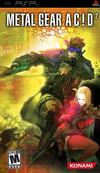
Metal Gear Acid 2 Post-Mortem
[Now Experiencing] [Computer Gaming]
The original Metal Gear Acid was an intriguing concept - a collectable card-gaming stealth espionage action game. Unfortunately it was plagued with a host of problems, including a laughably poor plot, glacially slow pacing, uninteresting enemies, horrible game balance, and a swarm of user interface inadequacies.
With the release of Metal Gear Acid 2, I'm pleased to announce that Kojima Studios has removed some of the interface inadequacies.
In Metal Gear Acid 2, you'll be taking control of the legendary hero Solid Snake on another of his patented stealth espionage missions into the heart of a terrorist-controlled military facility. Well, actually, it's not the Snake. It's a clone, or something. But close enough. The point is, you'll be sneaking your way through a good dozen or so enemy-packed levels on a quest to do away with yet another new giant-mech-like Metal Gear. And when I say "sneaking", I mean shooting holes in anything that moves, because it would take the patience of some kind of zen master to play this game the way it was meant to be played.
Like the first Metal Gear Acid, you won't be moving around in real time. Instead you'll be drawing cards from a deck and "playing" them to move around, equip and fire guns, and perform sundry other actions. All actions have a "cost", representing how much time they take to perform; if you use a lot of cost, your enemies will have a correspondingly greater number of actions before you get to act again.
You won't be going it alone, either. About a third of the way through the game you'll be joined by Venus, who's some sort of female assassin. From that point forward, you take on the game's missions as a pair, which makes for some theoretically interesting game mechanics. For instance, when both characters are able to target the same enemy, firing on that enemy will produce a bonus for "covering fire". With some weapons you can actually have both characters firing simultaneously, creating a kind of kill zone. If you were bothering to actually be stealthy, it also has some nice potentials in terms of one character creating a distraction so the other can sneak past a guard, and so forth. But you won't bother with stealth, so you're unlikely to actually use that potential.
As you progress through missions, you earn points, which can be spent at the intermission shop to buy "packs", which add new cards to your collection. You can use those cards to customise and improve the decks that Snake and Venus use during missions. You'll find that the power level of your cards hikes up dramatically as the game goes on, but the danger level of your opponents never significantly increases. As a result, the early missions where you have few cards can be a little tricky, while the later missions are laughably easy.
Of particular note as far as game balance goes are a set of cards which reduce your cost when played, effectively allowing you to act more often. Once you have enough of these cards in your deck, you'll find your able to string together many, many actions without letting your opponents respond. On some levels, you may reach the exit before the guards of the stage get to act. It breaks the immersion considerably. What's worse, this was a problem in the first game - but instead of being fixed, it's been made worse. There are now more cost reducing cards, and the new ones are even more powerful than the old ones.
As any fan of Metal Gear Solid knows, the most memorable parts of a good Metal Gear game are the boss fights, and sure enough Metal Gear Acid 2 features a good half dozen skirmishes with named individuals. But don't hope for enemies of the caliber of Psycho Mantis, or The Sorrow. Heck, you won't even find something as good as Vamp. Almost all of the bosses in Acid 2 are basically just big tanks of hit points. To defeat them you don't have to work out their pattern, or use a clever trick - you just have to pump them full of lots of bullets. Some of the early ones are actually less challenging than killing the regular guards. Even the final confrontation with Metal Gear itself is notably anticlimactic.
The plot itself is substantially better than the original Acid, but it's still more than a little lame. Like Acid, it takes place outside the Metal Gear Solid continuity, featuring a Snake who's clearly not the actual Snake we know and love from the Solid games. There's very little in the way of meaningful mystery or revelation going on, and you'll find yourself not really caring about what happens next.
As a side note, Acid 2 has an absolutely appalling treatment of its female characters. And I'm saying this as a person who has no real problem with playing the Smackdown vs Raw wrestling series. Acid features not just a fairly high level of innuendo and cheesecake, but it's completely contextually inappropriate. The character of Eva in Metal Gear Solid 3 may have gone around half-dressed most of the time, but it fit the whole James Bond ambience of that game. In Acid 2, the feeling is more of a gritty techno-thriller, and when the sharp professional Dr Takiyama happens to have a giant cleavage, a half open labcoat, and no bra or shirt underneath, it just looks grotesque. Likewise, the fact that Venus regularly bounces up and down on the balls of her feet and then looks down at the effect this has on her breasts just comes across as really bizarre.
The music in Acid 2 is passable if not special. It features a lot of musical motifs from the Solid games, along with some new music of its own. The mix works, but it's certainly not as memorable as Harry Gregson-Williams' scores for the PlayStation games. Sound effects are mostly passable footsteps, gun sounds, and the usual cast of alert and alarm noises that Metal Gear players are no doubt familiar with by now.
The graphics are a little better than the dark and muddy visuals that the first Acid demonstrated. Acid 2 goes for a comic-book cell-shaded look, which makes it easier to see what's going on, but doesn't really add much to the game as a whole. The graphics are technically strong but artistically uninteresting.
One of the gimmicks that Acid 2 made a big deal of during development was that the game would feature a 3D mode, and would ship with a 3D viewing apparatus called the "Solid Eye". It's important that you don't get excited by this. The Solid Eye is a cardboard box that you assemble yourself. The 3D effect is achieved by displaying a similar image on both the left and right of the PSP screen, and the box makes sure your left eye sees the left image and your right eye the right. Slight differences in the images produce the illusion of depth.
For the 3D effect to work correctly, you have to keep your face pressed to the cardboard box, eyes about six inches from the screen. Your eyes start to hurt after about five minutes. Needless to say, you won't be interested in playing the game like that, so after trying it once you'll probably leave the 3D mode switched off and never return to it. It's not tied into the game in any way - there's not any puzzles that require it or anything - so it's easy to forget the mode is even there.
The game also contains every cutscene from Metal Gear Solid 3 in a special theatre mode, and watching some of those in 3D is kind of cool, but if you've played Solid 3 you've seen them before, and if you haven't they'll spoil that vastly superior game for you, so again it's a bit of a pointless exercise. There's also some not-quite-soft-porn 3D, with some scantily clad Japanese women fondling replica guns and having waterfights and suchlike, which isn't even as interesting as it sounds.
The interface is significantly better than the original Acid. There's a lot of built in help features, which are handled well, in terms of being available without being annoying. Moving around is also relatively painless now. You can open doors and pick up items without sacrificing the rest of your move. A free look mode allows you to ascertain exactly what your enemies can and cannot see, making the stealth that you won't be doing that much easier. There's also a lot more information available in the deck construction area, although the fact that Acid 2 features more than twice as many cards as its predecessor means you'll still be spending an eye-gougingly long time scrolling through lists when it comes time to build your deck. And despite all the improvements, it's still an unnecessarily complex and unintuitive game.
If you're wondering whether to buy this game, the answer is no. Sadly, it's probably among the better PSP games available, but that's a comment on the PSP and shouldn't be seen as an endorsement of Acid 2. It's marginally better than the original Acid, so if you want to buy into the series you're better off with this one - there's no real plot continuity to worry about. But there are better Metal Gear games, there are better collectable card games, and there are better turn-based strategy games, so it's really hard to recommend Acid 2 to anyone for any reason. Give it a miss, and save your money for the forthcoming PSP Metal Gear Portable Ops.
Sunday, October 15, 2006
The Ghost Train
 [Game Design]
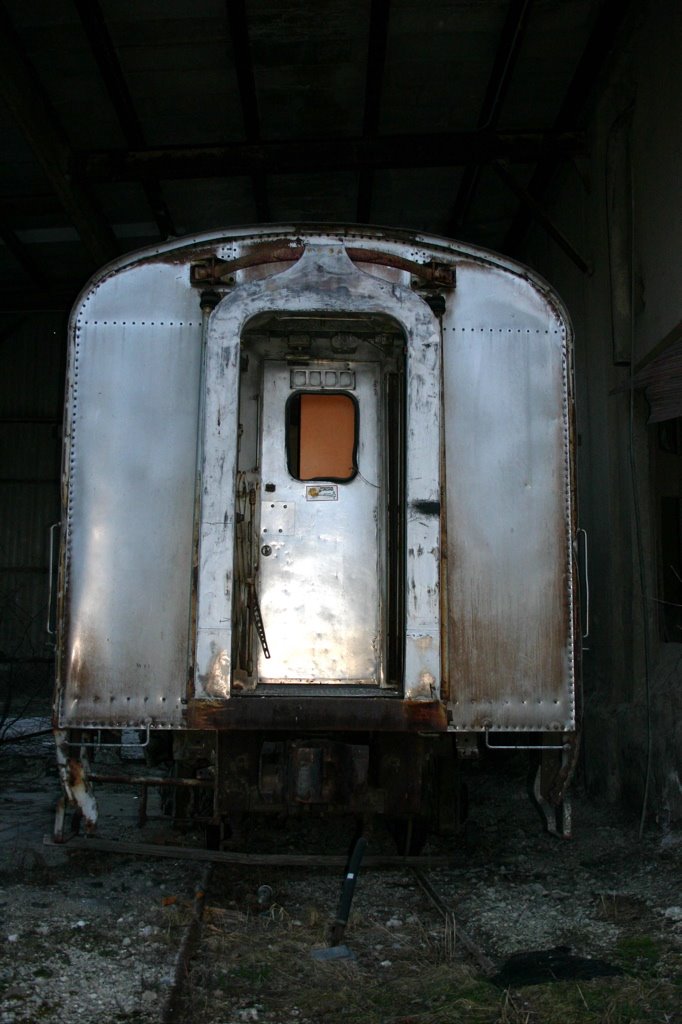
The most important rule of the ghost train is this: keep your hands inside the car at all times.
Which is to say, the ghost train is a ride, not a game. And this is why, I think, so many horror-themed videogames go so very, very wrong.
Good horror is about helplessness. It's about the inevitability of fear. It's about opening the rattling locker even though you know there's something horrible inside. Horror is what happens when your feet keep walking forwards when your brain wants to retreat.
There are a wide variety of horror games now on the videogaming market. Probably the most successful have been the Resident Evil and Silent Hill franchises. And I think the reason that these titles have continued to thrive and flourish while their competitors have died off is that they've grasped the concept of the ghost train. Horror games should be an experience, not a challenge.
You can't prepare for horror
If you're a survival horror afficionado, you owe it to yourself to check out Eternal Darkness: Sanity's Requiem on the GameCube, which is, for about 90% of its length, possibly the greatest horror game ever made, for a variety of reasons. Where it falls down is the endgame. As you progress through the game you learn a variety of magic spells. One of these is a shield. The way this works in the game mechanics is that the shield takes so long to cast that you really have to cast it when you're not fighting. Then you enter combat, and it soaks up the first couple of hits you take.
In the endgame, the difficulty of Eternal Darkness ramps up steadily. What this means is rather than progress through a series of increasingly tense and climactic encounters as a good cap to the rest of the game, you'll be inching your way through dull and repetetive combat by casting your shield, fighting one monster, and then waiting around for your magic to regenerate so you can cast shield again. By allowing your engagement with the forces of evil to become a methodical routine, the game strips almost all of the horror out of the final levels.
What is scary is not death, but the fear of death
Forbidden Siren is another example of a game where the fundamental gameplay is the antithesis of horror. Successful progression requires memorising enemy behaviour and using it to avoid detection in a Metal Gear-esque stealth fashion. And once you know that a given minion of darkness patrols a residential block in an unwavering straight-line patrol, it's really hard to actually be scared of that minion.
But that was actually the least of Forbidden Siren's many failings (which was a shame, as it had some great ideas). The real crazy, runaway, drooling-at-the-mouth disincentive to playing through the game was the difficulty. In the course of just the first three of the game's levels, you will die many, many times - and it gets worse from there onwards. Each time you die, you go back to the start of the level. They're not particularly short levels, either. That's not scary - that's just frustrating.
It's ironic that a prerequisite to fostering a fear of death in the player is making sure that they don't actually die that often. Games are more effective when they keep a player on the edge of death, constantly guzzling a diminishing supply of healing items. Always there are reminders of the player's mortality - a red tinge to the screen, a controller vibrating to simulate a sped-up heartbeat, or in the case of Eternal Darkness the very memorable hallucinations that occur when your sanity ebbs away. Always you know that the game could kill you at any second. And yet, in the best horror titles, it very rarely does, as long as you keep dancing to its tune.
In good horror, death is used not as a punishment for failing the challenge, but as a stick to keep a player acting in the spirit of the game. Death occurs when you stay too long in one spot, or when you try to explore areas that you clearly aren't meant to, or when you're too trigger-happy with your ammo instead of fighting the undead with a knife. Sometimes it may come from nowhere and without warning, just once, at the start of a segment of a game, to underscore the danger of everything else that's coming up, but it's rare that you'll die of the same thing twice, and reloading your save game will be a rare exercise.
Probably the best example is the original Silent Hill. You die once, right at the start, no matter what you do - and then, if you're reasonably competent, you'll be fine the rest of the game. But you'll never forget those zombie-things dragging you to the ground in that back alley...
Good fiction is about defeating the reader's expectations
And that's doubly true when the fiction in question is horror. It is absolutely key that what comes next is substantively different from what came before. The game state needs to keep changing. If you talk to anyone who's played a survival horror, they're unlikely to rant about how excellent the basic mechanics were - they'll tell you about the one-off occurrences, and the way that things got crazy near the end of the game.
If there's one thing that's memorable about Silent Hill 4: The Room, it's the gradual descent of the titular room from a game hub and place of safety into a nightmarish hell-area more dangerous than what lies outside it. It's a fantastic design choice that makes up a great deal for some of the less inspired levels that make up the rest of the game.
Eternal Darkness mixes defeating the player's expectations into the basic gameplay. You have a sanity meter that drops whenever you see a monster or use magic, and goes back up when you cathartically chop a monster's corpse into small pieces. When your sanity meter drops too low, you're likely to experience hallucinations. These range from seeing cockroaches crawling across the inside of your TV screen, to entering rooms and seeing your character explode into chunks (and then reappearing intact back outside the door, as if you'd never entered), to, in one memorable example, the game pretending to reset and then crash. There's a huge variety to these, and you're unlikely to see them all in a single playthrough.
The Suffering, Silent Hill 3 and Half-Life mix a number of scripted sequences into the basic level design. These vary in effectiveness. Half-Life, not a horror game per se, still manages a fairly regular catalogue of scares from suddenly bursting pipes, collapsing walkways, and ubiquitous headcrab attacks. The Suffering I recall as being very effective when I actually played it, but now, about a year later, I'm hard pressed to remember any parts of the game worth mentioning. Silent Hill 3 has a very slow start, but has some fantastic vignettes later in the game, notably the ghost house and the room with the mirror.
Sit back and be scared
I guess what I'm saying is, in designing horror games the focus needs to be on providing a consistent, coherent, and well paced experience for the player, rather than on creating a challenge. Game mechanics should be focused on causing horror-friendly behaviour in the player - keep them moving, keep them on the verge of death, and rarely let them feel safe or well-prepared. Basic game tools which make for scary or disturbing situations are probably a better investment than scripted sequences, although there's a place for both.
And make sure the player keeps their hands inside the car at all times.
This post is The Dust Forms Words' entry into the October Round Table of Bloggers.
Saturday, October 14, 2006
Last LonelyGirl 15 Post
[Web Stuff] [Film] [Comics]
As a sort of finale to the LonelyGirl 15 posts I did a while back, I present the latest news direct from the mouth of Buffy and Firefly creator Joss Whedon. Discussing his upcoming Wonder Woman film adaptation over at fansite Whedonesque:
As a sort of finale to the LonelyGirl 15 posts I did a while back, I present the latest news direct from the mouth of Buffy and Firefly creator Joss Whedon. Discussing his upcoming Wonder Woman film adaptation over at fansite Whedonesque:
Wonder Woman has finally been cast. To no one's surprise, we eschewed all those tired movie and TV personalities and cast the interweb star "Lonelygirl", or whatever her actual name is. Congratulations, whomever!
- Joss Whedon
So there you have it. Clearly definitive news, and absolutely not a tongue-in-cheek off-the-cuff joke. Look forward to our friend Jessica Rose saving the world from Ares, Circe and/or the Cheetah soon in a theatre near you.
Thanks to Internal Collapse for the tip-off.
Thanks to Internal Collapse for the tip-off.
Thursday, October 12, 2006
Square-Enix Goodies
[Computer Gaming] [Stuff]
While I was talking about Square-Enix stuff anyway, I thought I'd show off the awesome Dragon Quest keychains I picked up while I was in Japan. Check it out: The Last Key and the Thief's Key.


They're each about 6 centimetres long and are reasonably robust. Mary got the Last Key as a gift for looking after the house while I was away; I kept the Thief's Key and it's currently the keyring for the spare set of house keys. Squeenix also does the Magic Key but it wasn't in stock while I was there.
In the process of digging up photos of these from the net, I happened to discover that they ALSO do stuffed Final Fantasy monsters. I absolutely MUST have this Cactuar.
 There's also stuffed Tonberries and Mogs. They all go for about 2,000 yen ($25 AUD), so people who want to get me Decemberween presents, take note.
Kingdom Hearts II Post-Mortem
 [Now Experiencing] [Computer Gaming]
Okay, I haven't posted much for the last couple of days, and the reason for that is largely because I've been helping Mickey Mouse save the universe from heart-stealing world-eating forces of ultimate evil.
Kingdom Hearts II is a sequel to Square-Enix's succesful Disney-themed action RPG Kingdom Hearts, and like the original it's a release for the PlayStation 2. Kingdom Hearts II is ALSO a sequel to the GameBoy Advance title Chain of Memories, which anecdotally seems to have been significantly less successful.
You'll want to have played Chain of Memories, because Kingdom Hearts II picks up exactly where Chain left off. Sora's still encased in a giant white pod, having his memories reconstructed by a mysterious young girl named Namine. He's been moved from Castle Oblivion at the instruction of an enigmatic red-cloaked figure named DiZ, and is now connected to a world named Twilight Town, where his destiny is about to become entangled with that of a young boy called Roxas.
Over the course of a three-hour tutorial-slash-prologue, you'll meet Roxas, explore Twilight Town, and learn the fairly simple controls for this sprawling action RPG. Most of the main concepts from the original game return - you'll be jumping, running, and swinging a keyblade much the same as you did the first time around. These basic abilities are complemented by a largely useless collection of summons, which are annoying to use and not particularly effective, and also a new power - that of the Drive Form. By choosing the Drive command from the action menu, Sora can now change into one of six alternate costumes which bestow a range of special combat abilities on him, most commonly enhanced speed, damage, and combo attacks.
New to Kingdom Hearts II are reaction commands. Occasionally when fighting an enemy, you'll be prompted to press the triangle button to execute a special attack or defence specific to that enemy. This works into the existing battle system surprisingly well, and is almost completely optional - reaction commands make winning easier, but you can still punch through pretty much everything while completely ignoring the whole reaction system.
Two major elements of the previous games are completely absent. Firstly, the card-battling mechanics of Chain of Memories are thankfully nowhere to be seen. With all due respect to Chain, which was an interesting experiment, you'll be extremely glad that there's nary a card to be seen.
Secondly, while the original Kingdom Hearts could be called a platformer-RPG, Kingdom Hearts II features almost no platforming elements. You'll never need to jump to raised platforms, make timed crossings of floating islands, or explore difficult to reach parts of levels looking for chests. Pretty much everything this time around is at ground level. Well, except combat, which still transforms into the kind of anime-inspired feats of aerial superhuman skill that the first game delivered so well.
I actually liked the platform sections of the original Kingdom Hearts, but you're unlikely to miss them much in the sequel. The effect is that the game is much easier and friendlier to new players, and is also much more focused on its combat, which it delivers in both quantity and quality.
I've heard a lot of people complain about the Kingdom Hearts combat system, and to be fair, it does consist mostly of just mashing the "X" button a lot. But for all that, it's still surprisingly satisfying, and it certainly looks fantastic. As you level up, you gain new moves and abilities which you can equip to beef up your combat prowess. The number of abilities you can equip at a time is limited by your ability points (AP), which also rise as you gain experience, so there's a certain amount of strategic thinking involved in choosing what abilities you'll have available at any given time.
The real star of Kingdom Hearts II, though, are the worlds. Over the course of the game you'll visit an impressive roster of Disney properties. Environments from the original game are featured, including Halloween Town from The Nightmare Before Christmas and the 100 Acre Wood from Winnie the Pooh. There's also an expansion of some of the worlds that were only glimpsed or hinted at before, including Disney Castle, The Lion King's Pride Lands, and the castle from Beauty and the Beast.
These worlds are all good, but what's likely to really excite you are the completely new entries - the worlds of Steamboat Willy (rendered in black and white and featuring a projector-click background sound and copious film grain), Tron (complete with the original voice cast including Bruce Boxleitner in the title role), and Pirates of the Carribean (sadly NOT featuring the original cast, but with lots of endearing Jack Sparrow finger-wiggling).
The graphics are among the best featured on the PlayStation 2, with an absolutely fantastic level of detail, including special costumes for Sora, Donald and Goofy when they visit many of the worlds. All environments are visualised in the style of the movies they draw inspiration from, and are filled with recognisable sets and memorable moments. Characters are animated with faithful attention to the source material - Jack Skellington's showy and expansive arm gestures are depicted just as well as the exhausted flying style of Iago the Parrot or the loping run of the Beast. The only world that noticeably suffers in the animation department is that of The Lion King, but considering the huge amounts of attention to animal movement that went into the original film of that, it's perhaps forgiveable that it was not all successfully transferred to this game.
The sound work is also exceptional. Utada Hikaru returns to design new original music for much of the game, including the catchy new title song, Sanctuary. This time around, you won't catch as much of the music from the original films used as background music (although Halloween Town still has the "This is Halloween" instrumental playing), but you probably won't miss it much.
Also, as if to compensate, the underwater world of Atlantica consists entirely of rhythmn-based minigames themed around a variety of Little Mermaid songs. It's a great idea that makes good use of some of the memorable music that accompanies many Disney movies, but it's unfortunately a bad implementation. The versions of Under the Sea and Part of Your World that are used are truncated and feature appalling vocals, while the other three (presumably original) songs vary in quality from the putrid Swim This Way through to the surprisingly good music for the fight against Ursula. The minigames that accompany the songs are also less than engaging, so it's probably a blessing that Atlantica as a whole is an entirely optional part of the game not required to reach the ending.
The game's list of voice talent is amazing, including Haley Joel Osmont returning as Sora, Christopher Lee as DiZ, and the entire English voice cast of Final Fantasy VII: Advent Children. Wherever possible, Disney characters have been voiced by the actors from the original movies, or failing that the TV shows or direct-to-video sequels. Names like Zach Braff, Bruce Boxleitner, Pat Morita, David Ogden Stiers, Angela Lansbury, and James Woods fill the credits, alongside veteran voice actors such as Tara Strong, Dan "Homer" Castellanata, John "Bender" DiMaggio, Kath "Phil and Lil from Rugrats" Soucie, and Tress MacNeille (who has played the voice of Daisy Duck in pretty much everything since 1999).
If there's a problem with Kingdom Hearts II, it's that it has too great a focus on minigames. Pretty much everywhere you turn you'll find some minor task to perform that uses different gameplay mechanics. Luckily, most of the minigames are well designed, fairly fun, and, most importantly, optional. While there are some fairly challenging goals set for completists who want to revisit the many, many minigames, you'll never need to achieve them to progress, and - in a burst of good sense on Squeenix's part - most of the minigames don't even give you power-ups or other things that aid you on the main spine of the story. Usually the sole reward for achieving the challenge goals is getting a little orange Mickey Mouse icon next to the challenge's listing in the Jiminy's Journal section of the menu. (Contrast this approach with Final Fantasy X-2, which had a similar obsession with minigames but without the redeeming features.)
The GummiShip minigame returns from the original Kingdom Hearts as well, and while it's NOT entirely optional, the mandatory parts are very easy. More importantly, it's actually kind of fun now. Square Enix has developed the shoot-em-up subgame from its first incarnation into a really enjoyable rail shooter that sees you blasting your way through absolute legions of space-faring Heartless. Once again, there's almost no connection between the upper levels of this minigame and the main quest - there's no reason to come back for more except for the fun of it. I actually found it good enough to stand as a game all on its own - I played through all the way to the nightmarishly hard final boss of the gummi routes just because it was enjoyable to do so.
As far as content goes, the game probably has about 30 to 35 hours of play just in the main plot, which extends to a total of 70 or 80 hours if you're going to complete everything the game has to offer. Very little of that length feels repetetive or padded, with the possible exception of completing the synthesis material lists, which is a process which can be aptly described as "farming" (and is, again, entirely optional).
All in all, Kingdom Hearts II stands as an exceptional triple-A game that benefits from a combination of fantastic creativity, professional execution, and insightful game design. While it may not be the ideal entry point into the series for new players, it's a worthy follow-up for existing fans and one that'll get you excited about the franchise all over again. Definitely worth your money and time.
Subscribe to:
Posts (Atom)

